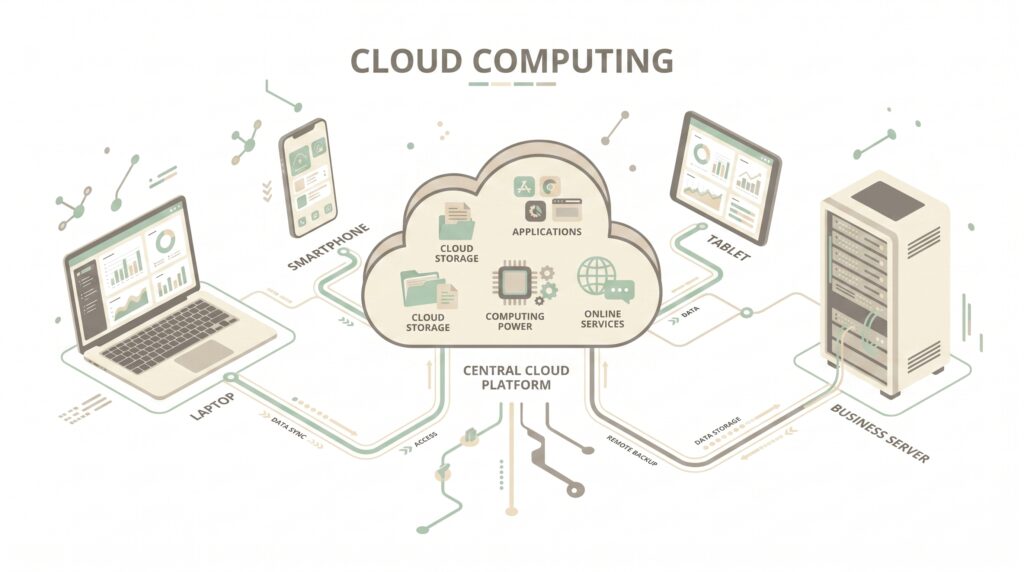
Confidential Computing Explained: How It Protects Data in 2026
Businesses store enormous amounts of information online, including customer records, financial details, medical information, and confidential company documents. Protecting this information has become an important responsibility for every organization that uses modern technology.
Traditional security methods help protect information when it is stored or transferred. However, there is another situation that also needs attention: what happens when a computer is actively processing sensitive data?
This is where Confidential Computing becomes important. It introduces a way to protect information while applications are using it, adding another layer of security to cloud environments and modern computing systems.
In this guide, you will learn what Confidential Computing means, how it works, why businesses are adopting it, and where this technology can be useful in 2026.
What Is Confidential Computing?
Confidential Computing is a security technology designed to protect sensitive information while it is being processed by a computer.
Normally, data can be encrypted when saved on a storage device or transferred through a network. However, applications generally need to access information in a usable form while performing calculations or completing tasks.
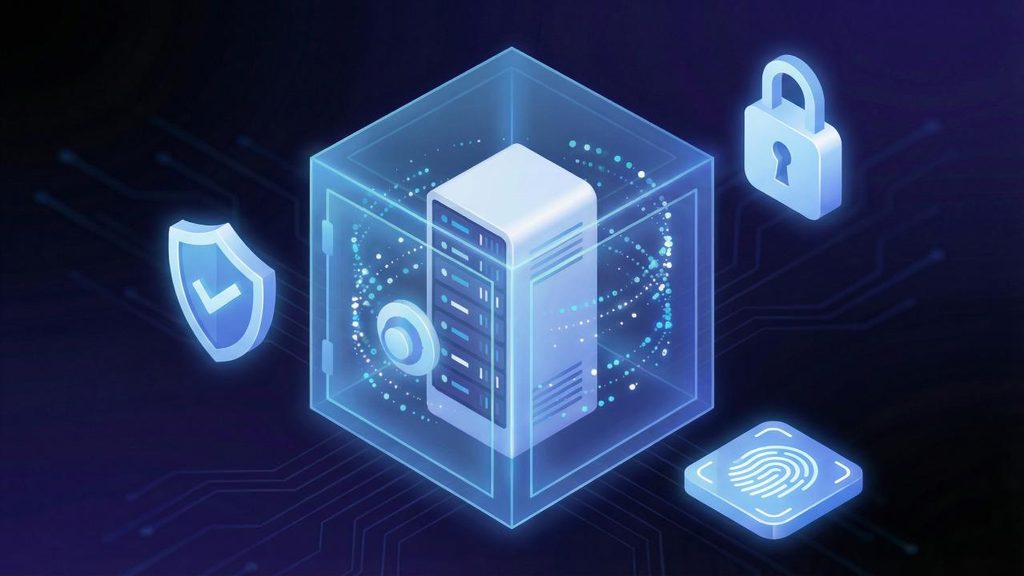
Confidential Computing addresses this challenge by using hardware-based security environments called Trusted Execution Environments (TEEs).
A TEE creates an isolated area where authorized applications can process sensitive information. The surrounding system is restricted from accessing or modifying protected workloads through the security mechanisms provided by the hardware.
For example, a financial company may need to process customer information using cloud infrastructure. Confidential Computing can help protect that information during processing, reducing the amount of trust placed in the underlying infrastructure.
How Confidential Computing Works
To understand this technology, it helps to look at the three main states of data.
Data at rest: Information stored in databases, hard drives, or cloud storage. Encryption helps prevent unauthorized people from reading stored information.
Data in transit: Information moving between computers, applications, or servers. Encryption protocols such as HTTPS and TLS help protect this communication.
Data in use: Information actively being processed by a computer’s processor and memory.
Confidential Computing focuses on the third state.
It uses hardware-supported isolation to create a protected environment for sensitive applications and their data.
Understanding Trusted Execution Environments (TEEs)
A Trusted Execution Environment is a protected computing area that operates separately from the surrounding system.Microsoft Azure provides confidential computing services that help protect sensitive data while it is being processed. Learn more in the official Microsoft Azure Confidential Computing guide.
It uses hardware security features to help prevent unauthorized access to information being processed inside the environment.
The main characteristics include:
- Isolation: Protected applications operate within a restricted environment.
- Data confidentiality: Sensitive information is shielded from unauthorized access.
- Code integrity: Security mechanisms help prevent unauthorized modification of protected workloads.
- Attestation: A system can provide evidence about its security configuration before sensitive information is released.
These capabilities help organizations reduce exposure when processing confidential information.
What Is Remote Attestation?
Remote attestation is an important part of many security technology systems.
It allows an application or another trusted party to verify information about a protected computing environment before sending sensitive data to it.
For example, a company may want to confirm that a cloud workload is running inside an expected secure environment before providing access to confidential records.
This verification helps establish trust through technical evidence rather than relying only on the cloud provider’s statements.

Why Confidential Computing Matters in 2026
As businesses move more applications and databases to cloud platforms, protecting information during processing has become increasingly important.
Encryption at rest and in transit provides essential protection, but organizations also need to consider what happens when sensitive information is actively being used.
The technology offers another security layer for these situations.
1. Better Protection for Sensitive Information
Organizations often process information that should not be exposed to unauthorized users.
Examples include financial transactions, healthcare records, customer identities, and confidential business documents.
By using hardware-based isolation, Confidential Computing helps protect sensitive workloads while they are running.
2. Reduced Dependence on Infrastructure Operators
Cloud environments involve several infrastructure components, including servers, operating systems, and virtualization software.
Data protection can reduce the ability of privileged infrastructure components to access protected workloads.
This is particularly valuable for organizations that want stronger technical safeguards when running applications on shared cloud infrastructure.
3. Support for Cloud Security
Businesses increasingly use cloud platforms to operate applications and manage information.
Secure data processing can help organizations protect sensitive workloads without abandoning the flexibility of cloud infrastructure.
It can also complement existing security practices such as encryption, identity management, and access control.
4. More Secure Data Collaboration
Sometimes multiple organizations need to analyze information together without freely sharing their original datasets.
Confidential Computing can support protected collaboration by allowing approved workloads to process information inside isolated environments.
For example, financial institutions may want to analyze shared information to identify suspicious patterns while limiting unnecessary exposure of their underlying data.
5. Additional Support for Compliance Requirements
Organizations in regulated industries must follow specific rules for handling sensitive information.
Cloud security can contribute to a broader security strategy by providing additional technical protection during data processing.
However, using this technology alone does not automatically make an organization compliant. Businesses still need appropriate policies, access controls, documentation, and legal compliance measures.
Real-World Applications of Confidential Computing
This approach is useful in situations where sensitive information must be processed without exposing it unnecessarily.
Here are some important application areas.
Healthcare and Medical Research
Healthcare organizations handle private patient information, medical histories, and research records.
Trusted execution environments can help create protected environments for processing this information.
For example, researchers from different institutions may need to analyze medical datasets together. A protected computing environment can help reduce unnecessary access to the original information.
Banking and Financial Services
Banks and financial institutions regularly process confidential customer information.
Confidential Computing can support sensitive activities such as transaction analysis, fraud investigation, and financial data processing.
It provides an additional protection layer when applications operate on shared or external infrastructure.
Cloud Computing
Cloud providers offer computing resources that businesses can use without maintaining their own physical servers.
However, organizations may have concerns about protecting sensitive workloads in shared infrastructure.
Confidential Computing helps address some of these concerns through hardware-backed isolation and attestation.
You can also read our guide on <a href=”https://techstuffnexus.com/cloud-computing-explained/“>Cloud Computing Explained</a> to understand how cloud services work.
Government and Public Services
Government departments may process confidential records involving citizens, public services, and sensitive operations.
Confidential Computing can help protect these workloads when organizations use cloud-based infrastructure.
Its usefulness depends on the specific security requirements and the way the environment is configured.
Business Data Analytics
Companies often use analytics platforms to understand customer behavior, business performance, and operational trends.
Confidential Computing can help protect sensitive information during certain analytical workloads.
This can be useful when organizations need to process data while maintaining stronger privacy controls.
Confidential Computing vs Traditional Encryption
Traditional encryption and Confidential Computing are not competing technologies. They protect different states of information and can work together.
| Feature | Traditional Encryption | Confidential Computing |
|---|---|---|
| Data at rest | Protects stored information | Can work alongside storage encryption |
| Data in transit | Protects information being transferred | Can complement network encryption |
| Data in use | Not its primary protection purpose | Specifically designed to protect processing |
| Main technology | Cryptographic encryption | Hardware-based isolation and TEEs |
| Common use | Secure storage and communication | Sensitive workload processing |
The strongest approach is to combine suitable encryption methods with access controls, secure infrastructure, and Confidential Computing where appropriate.
Challenges and Limitations of Confidential Computing
Although Confidential Computing offers important security capabilities, it is not a complete solution to every cybersecurity problem.
Organizations should understand its limitations before adopting it.
Hardware Compatibility
Confidential Computing depends on supported hardware and platform capabilities.
Older systems may not support the required security features, which can make implementation more complicated.
Performance Considerations
Creating protected environments can introduce additional processing requirements.
The actual performance impact depends on the hardware, workload, software design, and implementation.
Businesses should test important applications before moving them into production environments.
Application Compatibility
Some applications may need configuration changes or specialized development to work correctly with particular TEE technologies.
Organizations should check compatibility before selecting a platform.
Configuration and Management
Confidential Computing still requires careful security management.
Poor access controls, vulnerable applications, insecure configurations, and exposed credentials can create risks even when protected execution environments are used.
Limited Protection Against Every Attack
Confidential Computing is designed to reduce particular risks involving access to data during processing.
It does not automatically prevent every possible attack, including application vulnerabilities, compromised user accounts, or all forms of side-channel attacks.
Organizations should use it as one component of a broader security strategy.
Major Companies Supporting Confidential Computing
Several technology companies provide products and infrastructure related to Confidential Computing.
Microsoft Azure: Offers confidential virtual machines and other services designed to protect workloads using trusted execution environments.
Google Cloud: Provides services such as Confidential VMs and Confidential Space to support protected data processing.
IBM: Offers Confidential Computing capabilities for organizations that need additional protection for sensitive cloud and enterprise workloads.
Intel: Develops hardware technologies that support trusted execution environments, including Intel Software Guard Extensions (SGX) and Intel Trust Domain Extensions (TDX).
AMD: Provides hardware-based security technologies such as Secure Encrypted Virtualization-Secure Nested Paging (SEV-SNP).
These technologies use different approaches, so businesses should evaluate their security requirements and platform compatibility before choosing a solution.Google Cloud also offers confidential computing solutions designed to protect data during processing. Explore the official Google Cloud Confidential Computing documentation.
How to Get Started With Confidential Computing
Organizations interested in this technology should begin by identifying the information and applications that require stronger protection.
A practical starting process includes:
- Identify sensitive workloads: Determine which applications process confidential information.
- Review existing security: Check current encryption, access controls, and infrastructure protection.
- Choose a supported platform: Compare cloud services and hardware capabilities that support Confidential Computing.
- Understand attestation: Learn how the selected platform verifies protected environments.
- Test application compatibility: Run performance and security tests before production deployment.
- Monitor the environment: Maintain regular security reviews, updates, and configuration checks.
Starting with a small, well-defined workload can help an organization understand the technology before expanding its use.
The Future of Confidential Computing
The need to protect sensitive information is growing as businesses use cloud platforms, distributed systems, and shared data environments.
Confidential Computing is becoming an important part of discussions about cloud security because it addresses a specific gap in traditional data protection: safeguarding information while it is being processed.
Hardware improvements, better platform support, and more accessible development tools may help organizations adopt this technology more easily.
However, widespread adoption will depend on practical factors such as cost, performance, compatibility, and the ability to manage secure environments.
For businesses handling sensitive information, Confidential Computing offers an additional way to strengthen security without giving up the flexibility of modern computing infrastructure.
Frequently Asked Questions
1. What is Confidential Computing in simple words?
Confidential Computing is a security approach that helps protect information while a computer is actively processing it. It uses hardware-based isolated environments to restrict unauthorized access to sensitive workloads.
2. What is a Trusted Execution Environment?
A Trusted Execution Environment (TEE) is a protected area created with hardware security features. It allows authorized code to process sensitive information while restricting access from the surrounding system.
3. Is Confidential Computing the same as encryption?
No. Traditional encryption mainly protects stored information and data moving across networks. Confidential Computing focuses on protecting information while it is being processed.
4. Does Confidential Computing work with cloud computing?
Yes. Cloud providers offer Confidential Computing services that use supported hardware and trusted execution environments to protect selected workloads.
5. Which industries use Confidential Computing?
Healthcare, banking, financial services, government, cloud computing, and business analytics are among the areas where this technology can be useful.
6. Does Confidential Computing prevent all cyberattacks?
No. It helps reduce specific risks involving unauthorized access to data during processing, but it does not eliminate application vulnerabilities, compromised accounts, or every possible security threat.
7. What is the difference between a TEE and Confidential Computing?
A TEE is the protected hardware-based environment used to isolate sensitive workloads. Confidential Computing is the broader approach of protecting data during processing through technologies such as TEEs and attestation.
Final Thoughts
Confidential Computing is an important development in modern data security. It addresses a problem that traditional encryption methods do not primarily focus on: protecting information while applications are actively using it.
By combining trusted execution environments, hardware-based isolation, and attestation, organizations can add another layer of protection to sensitive workloads.
Although it has implementation challenges