AI Cybersecurity: 7 Powerful Ways AI Is Changing Cyber Defense in 2026

Artificial intelligence is changing how businesses, security teams, and cybercriminals operate. From automated threat detection to highly personalized phishing attempts, AI is making cybersecurity faster, more scalable, and more complex.
AI cybersecurity is therefore no longer just about using artificial intelligence to detect malware. It also involves protecting AI systems themselves while preparing for attacks that use AI to improve speed, targeting, and automation.
Microsoft’s 2026 Digital Defense Report says AI is compressing attack timelines and helping threat actors automate parts of reconnaissance, phishing, vulnerability discovery, malware development, and post-compromise activity. activity. AI is changing how organizations detect and respond to online threats, but basic security practices still matter. For practical protection tips, see our Cybersecurity Tips guide.
So, what exactly is changing?
What Is AI Cybersecurity?
AI cybersecurity refers to the use of artificial intelligence and machine learning technologies to identify, analyze, prevent, and respond to cyber threats.
Traditional security tools often depend on predefined rules, signatures, and known attack patterns. AI-based systems can analyze large amounts of security data and identify unusual behavior that may indicate a threat.
However, the term has another side.
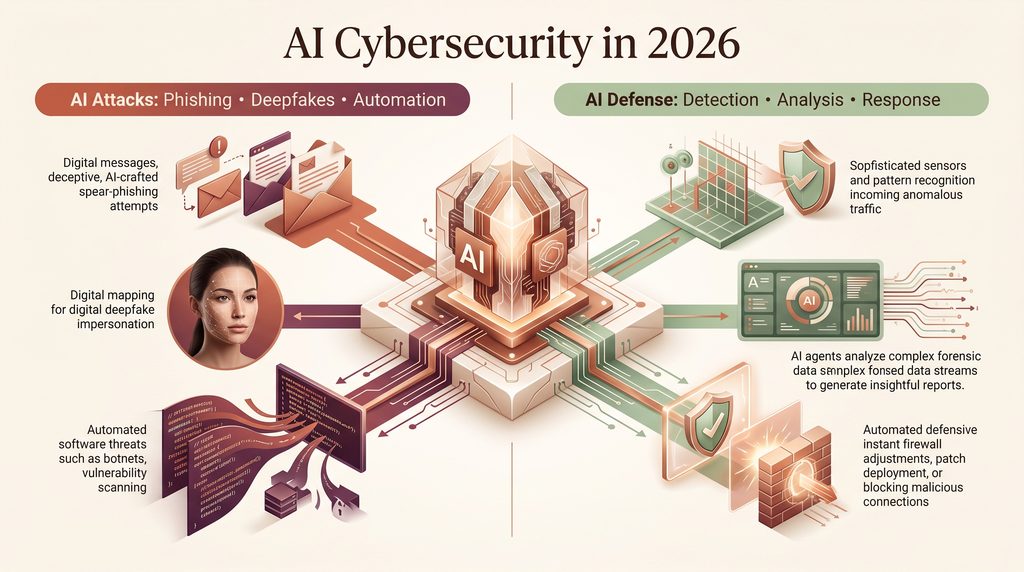
Cybercriminals can also use AI to automate familiar attacks, create convincing social-engineering messages, analyze stolen information, and scale operations.
That creates a cybersecurity environment where both attackers and defenders can use similar technology for very different purposes.
7 Powerful Ways AI Is Changing Cybersecurity in 2026
1. AI Is Making Threat Detection Faster
Security teams deal with enormous amounts of information from email, endpoints, cloud services, applications, identities, and network activity.
Manually reviewing every signal is difficult.
AI can help analyze these signals, identify unusual patterns, correlate related events, and prioritize alerts that deserve human attention.
Instead of treating every alert equally, security teams can use AI-assisted analysis to focus on activity that appears more suspicious or potentially damaging.
Microsoft says defenders are increasingly using AI to accelerate discovery, analysis, prioritization, and response.
2. AI Is Making Phishing More Convincing
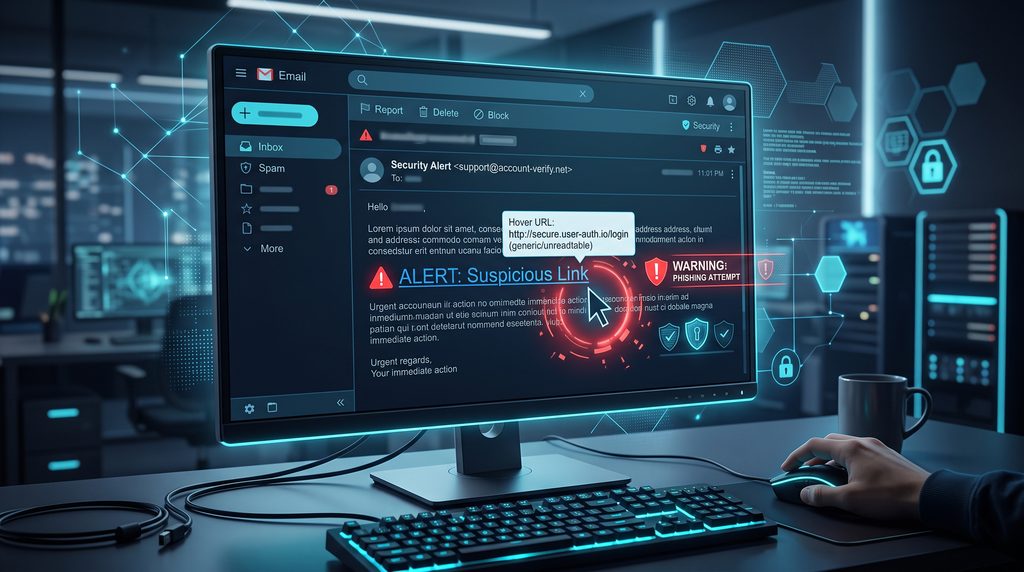
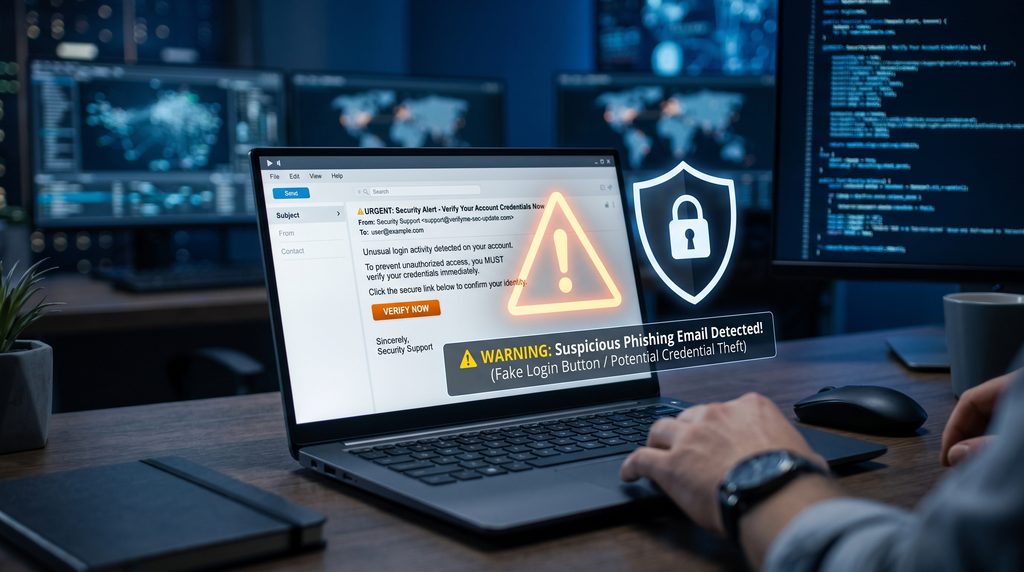
Phishing is not a new threat, but AI can make familiar techniques easier to personalize and scale.
Attackers can use AI-assisted tools to produce messages that appear more natural, adapt language to different audiences, or imitate common communication styles.
Voice and identity impersonation are also becoming important concerns.
A September 2026 Gartner analysis reported that 41% of surveyed organizations had dealt with an attack involving deepfake and social-engineering techniques during an audio call with an employee.
This means employees cannot rely only on spelling mistakes or obviously suspicious wording when evaluating a message or request.
3. AI Can Help Security Teams Investigate Attacks
When an incident happens, analysts may need to examine logs, user activity, endpoint events, email messages, and other information.
AI can help summarize large datasets and connect related signals.
For example, an analyst could use AI-assisted tools to investigate whether a suspicious login, unusual file activity, and an unexpected privilege change are related.
The goal is not necessarily to remove the human analyst. Instead, AI can reduce repetitive analysis so security professionals can spend more time making decisions and validating findings.
4. Attackers Can Use AI to Scale Cyber Threats
The defensive side is only half of the story.
AI is also helping attackers increase the speed and scale of familiar techniques.
Microsoft reports seeing AI applied across vulnerability discovery, reconnaissance, phishing, malware and exploit development, data analysis, and post-compromise activity.
This does not mean every cyberattack is completely autonomous.
In fact, Microsoft notes that most complex real-world intrusions still involve meaningful human direction. But AI can accelerate tasks that previously required more time, expertise, or manual effort.
5. AI Systems Are Becoming a New Attack Surface
Organizations are not only using AI to defend their networks. They are also deploying AI assistants, models, agents, and applications.
These systems can access company data, applications, tools, and sometimes sensitive information.
That creates new security questions.
Organizations need to consider:
- Who can access an AI system?
- What data can it retrieve?
- What actions can it perform?
- Which tools can it control?
- How are its activities monitored?
- What happens if an attacker manipulates its instructions?
Microsoft’s 2026 report identifies risks involving prompt and intent manipulation, sensitive data exposure, identity and privilege compromise, excessive agency, and operational integrity.
6. AI Is Helping Security Teams Automate Repetitive Work
Cybersecurity teams often spend significant time on repetitive tasks such as alert analysis, threat summarization, investigation support, and reporting. reporting. Many AI security systems rely on machine learning to identify unusual patterns and potential threats. Learn more in our Machine Learning Explained guide.
AI can automate or accelerate parts of this workflow.
For example, an AI-assisted security system could summarize an alert, connect it with related activity, identify potentially affected accounts, and provide an analyst with relevant context.
Automation can be useful when security teams are dealing with more alerts than human analysts can efficiently review.
But automated decisions still need appropriate controls, validation, and oversight.
7. Cybersecurity Is Moving Toward Continuous Defense
AI is contributing to a broader change in cybersecurity: organizations increasingly need continuous visibility rather than occasional security checks.
Microsoft’s 2026 report recommends combining asset visibility, vulnerability awareness, threat intelligence, detection, and AI-assisted analysis so organizations can reduce exposure and respond faster.
This is particularly important because attackers may move faster than traditional security processes.
A vulnerability that takes weeks to fix can create a significant window for exploitation if attackers discover and weaponize it much faster.
AI Cybersecurity vs. Traditional Cybersecurity
Traditional cybersecurity still provides the foundation for protecting systems.
Firewalls, endpoint protection, encryption, access controls, MFA, patch management, backups, and security awareness remain important.
AI adds another layer by helping security teams process information and recognize patterns at greater speed.
| Traditional Cybersecurity | AI Cybersecurity |
| Relies heavily on predefined rules | Can analyze patterns and behavior |
| Often focused on known threats | Can help identify unusual activity |
| Manual investigation can take time. | AI can accelerate investigation. |
| Static controls | More adaptive analysis |
| Human-heavy workflows | Human + AI collaboration |
| Known attack signatures | Behavioral and contextual signals |
The two approaches are not competitors. In practice, organizations can combine traditional security controls with AI-assisted capabilities.
What Are the Biggest AI Cybersecurity Risks?
AI creates opportunities for defenders, but it also introduces new risks.
Some important concerns include:
AI-Powered Phishing
AI can make fraudulent messages more personalized and convincing.
Deepfake Impersonation
Synthetic voice and video can make it harder to determine whether a communication is genuine.
AI Data Exposure
Sensitive company information entered into poorly governed AI systems can create privacy and security concerns.
Prompt Injection
Attackers may attempt to manipulate AI systems through malicious instructions contained in prompts, files, web content, or other inputs.
Excessive AI Permissions
An AI agent with more permissions than necessary could create a larger impact if its identity or behavior is compromised.
Automated Attacks
AI can help attackers perform repetitive tasks faster and at a greater scale.
SANS’ 2026 research found that 78% of surveyed organizations reported confirmed or suspected AI-enabled attacks, while 63% of practitioners reported significant shortcomings in AI threat detection and response.
How Businesses Can Protect Against AI-Powered Attacks
Businesses do not need to replace their entire security strategy with AI.
A stronger approach is to combine AI with established cybersecurity practices.
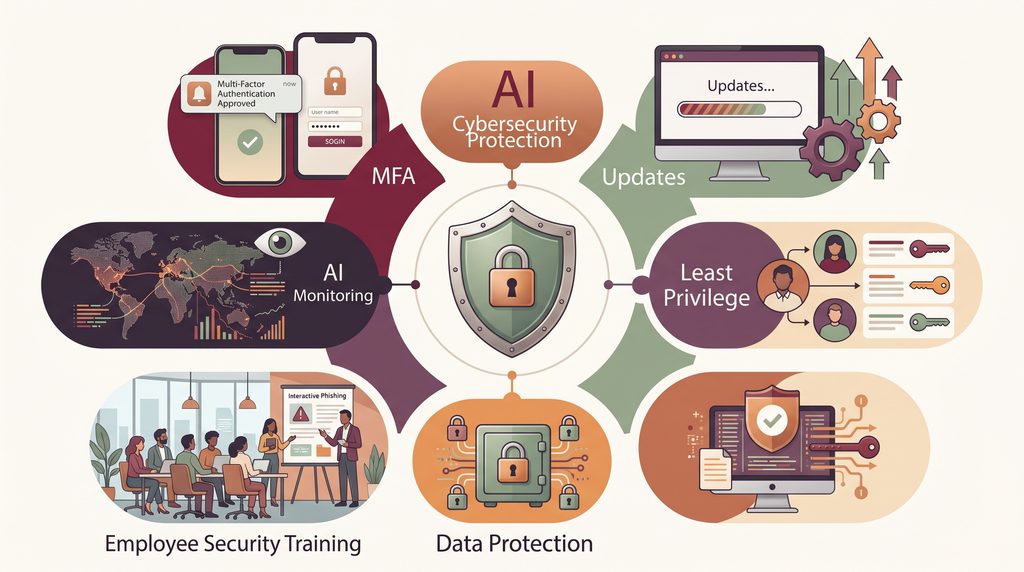
Use Strong Identity Protection
Use phishing-resistant MFA where possible, protect privileged accounts, and avoid unnecessary permissions.
Keep Software Updated
Vulnerability management remains important because attackers can use automation to discover and exploit weaknesses faster.
Limit AI Permissions
AI assistants and agents should only have access to the data and tools they actually need.
Protect Sensitive Data
Organizations should understand what information employees and AI systems can access, process, and share.
Train Employees
Employees should learn how to recognize phishing, suspicious requests, deepfake impersonation, and unusual authentication activity.
Monitor AI Activity
Organizations should monitor AI systems, agents, integrations, and their access to company resources.
Maintain Backups and Recovery Plans
Prevention is important, but organizations should also be prepared to recover when an attack succeeds.
For additional cybersecurity guidance, businesses can use the official resources from CISA.
Is AI Cybersecurity Important for Small Businesses?
Yes.
Small businesses may not have large dedicated security teams, making automated analysis and monitoring particularly useful.
However, AI should not replace basic security controls.
A small business should first focus on:
- Strong passwords and password managers
- Multi-factor authentication
- Regular software updates
- Secure backups
- Employee security training
- Limited administrator access
- Reliable endpoint protection
- Basic incident-response planning
Once these foundations are in place, AI-assisted security tools can help improve detection and investigation.
What Is the Future of AI Cybersecurity?
The relationship between AI and cybersecurity will continue in both directions.
Security teams will increasingly use AI to analyze threats, prioritize risks, investigate incidents, and automate repetitive security operations.
At the same time, attackers will continue experimenting with AI to improve familiar techniques.
The bigger change is speed.
Microsoft describes a threat environment where both attackers and defenders increasingly operate at machine speed.
That makes continuous monitoring, strong identity controls, data protection, vulnerability management, and human oversight increasingly important.
Final Thoughts
AI cybersecurity is becoming an important part of modern digital security because artificial intelligence is changing both sides of the cyber threat landscape.
Attackers can use AI to increase the speed, scale, and personalization of familiar attacks. Defenders can use the same technology to analyze security data, identify suspicious behavior, investigate incidents, and respond faster.
But AI is not a replacement for fundamental cybersecurity.
Strong identity protection, MFA, software updates, least-privilege access, employee awareness, data protection, and recovery planning remain essential.
The organizations that combine these fundamentals with responsible AI adoption will be better positioned to deal with a cybersecurity environment that is becoming increasingly automated and fast-moving.