AI Image Generation: Why AI Pictures Still Get Hands, Text, and Details Wrong in 2026
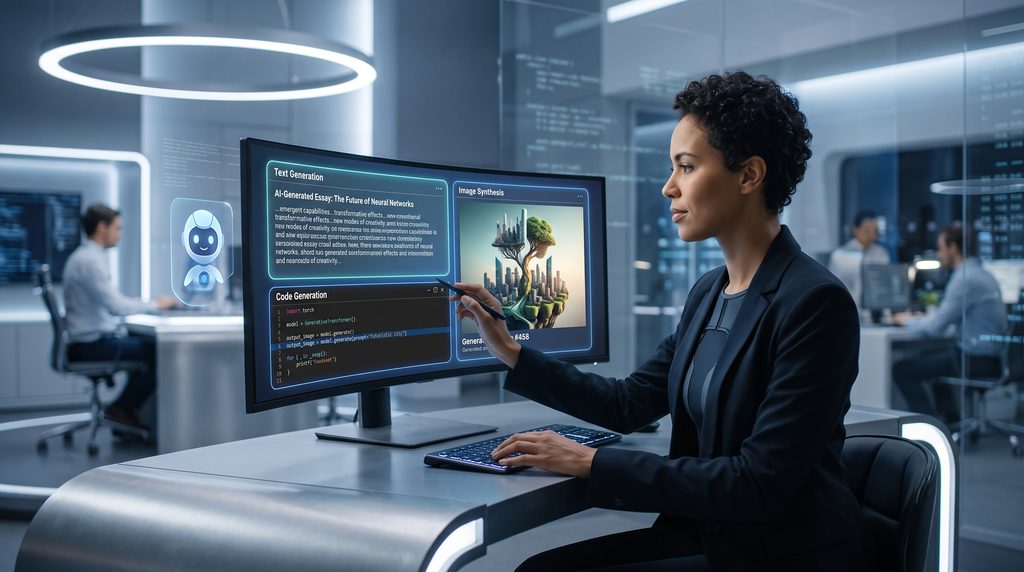
AI image generation has changed the way people create digital pictures. A short text prompt can now produce portraits, landscapes, product concepts, illustrations, and highly detailed scenes within seconds. The results can sometimes look remarkably close to photographs.
Yet there is another side to the technology. AI image generation has become one of the fastest-growing applications of generative artificial intelligence, allowing users to create detailed visuals from simple text prompts.
An AI-generated picture may look perfect at first glance but contain strange hands, distorted letters, unrealistic reflections, or objects that do not make physical sense. These mistakes can be surprisingly difficult to notice until someone looks closely.
So why does this happen?
The answer is connected to how modern image-generation systems learn patterns, interpret prompts, and construct pictures from visual information.
How AI Image Generation Actually Works
Most modern image-generation systems do not create pictures in the same way a human artist does. They learn statistical relationships from huge collections of visual data and use those patterns to produce a new image.
One important approach behind many modern systems is called diffusion.
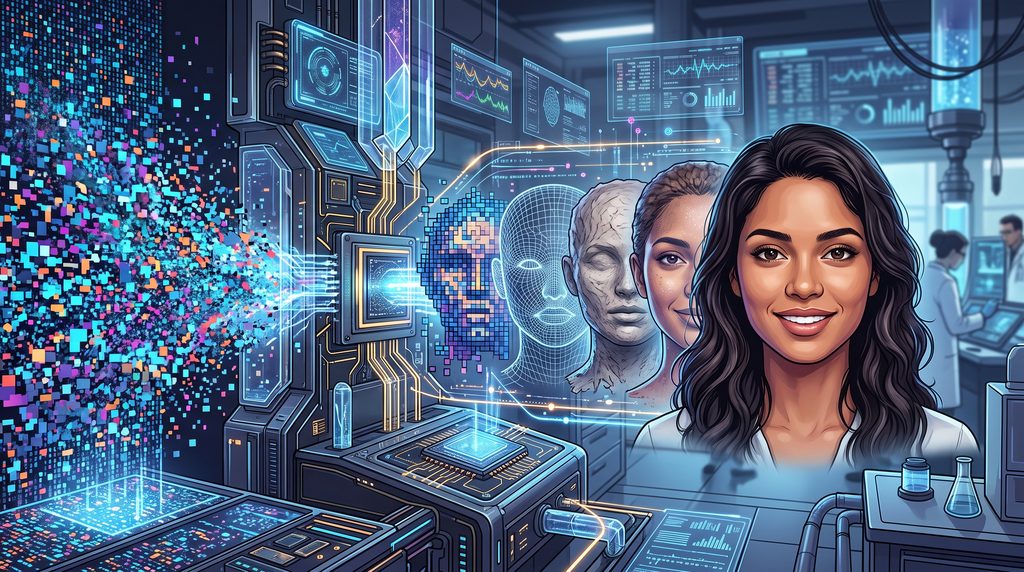
A simplified explanation is that the system begins with visual noise and gradually transforms that noise into an image that matches the user’s prompt. During training, the model learns how different visual patterns are associated with concepts such as people, buildings, animals, objects, lighting, colors, and artistic styles.
For example, if someone enters a prompt describing a futuristic city at sunset, the system does not search the internet for one existing photograph of that city. Modern AI image generation systems use learned visual patterns to turn written instructions into new images.
Instead, it generates an image based on patterns it has learned about cities, architecture, sunsets, lighting, perspective, and similar concepts.
This process can produce impressive results, but it also explains some of the technology’s weaknesses.
The model is generating a likely visual arrangement rather than consciously understanding the scene like a human.
Why AI-Generated Images Can Look So Real
Modern AI systems have become much better at reproducing visual details.
They can generate realistic skin textures, shadows, hair, clothing, reflections, backgrounds, and lighting. They can also imitate different photographic compositions and artistic styles.
Several factors contribute to this improvement. The rapid development of AI image generation has made lighting, textures, faces, and backgrounds increasingly realistic.
First, newer models generally have stronger visual representations. They can connect words in a prompt with complex visual patterns. AI image generation is one practical application of the broader generative AI technology discussed in our detailed guide.
Second, training techniques have improved. Developers have worked on making models better at following descriptions and producing visually coherent results.
Third, image-generation systems can operate at increasingly high resolutions, allowing them to create more detailed outputs.
The combination can make an image look convincing enough that someone might assume it was captured by a camera.
But realistic appearance does not necessarily mean the image is physically or logically correct.
Why AI Gets Hands and Fingers Wrong
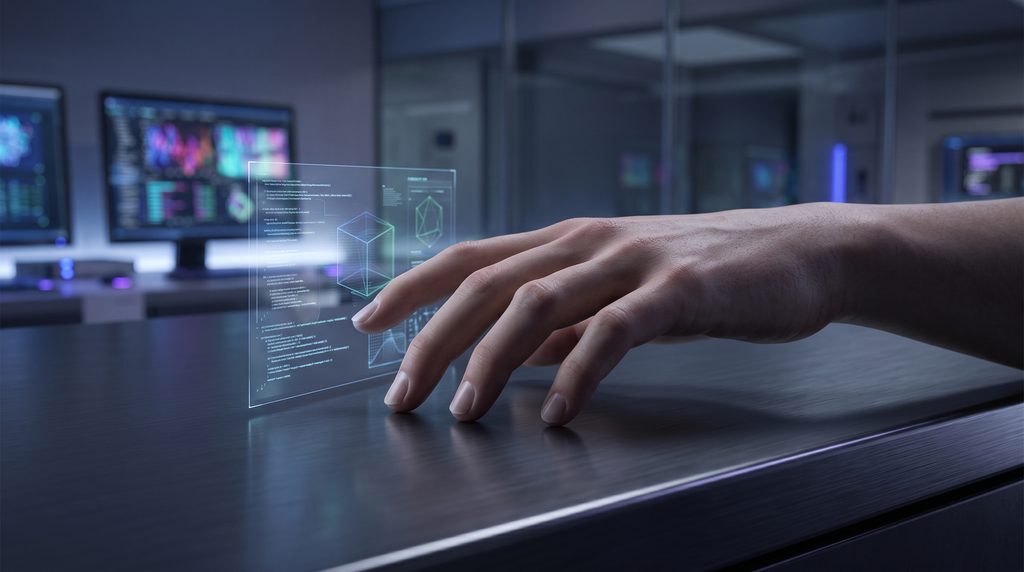
Hands became one of the most famous examples of AI image-generation problems.
A generated portrait might contain a beautiful face, realistic clothing, and convincing lighting, while the person’s hand has six fingers or fingers that appear strangely connected.
There is a technical reason for this. These limitations show that AI image generation can produce convincing visuals without perfectly understanding human anatomy.
Hands are complicated structures. Their appearance changes dramatically depending on their position, angle, lighting, movement, and interaction with other objects.
A hand holding a phone is visually different from an open hand. A person’s fingers can overlap, bend, disappear behind objects, or become partially hidden.
The model has to reproduce all of these relationships correctly.
If the learned visual patterns are ambiguous, the generated result may contain an anatomically unusual hand.
Modern models have improved considerably in this area, but unusual poses and complex interactions can still cause problems.
Text Inside AI Images Is Another Challenge
Text can be even more revealing.
Imagine asking an image generator to create a photograph of a restaurant with a large sign above the entrance. The overall restaurant may look excellent, but the sign might contain letters that are scrambled, duplicated, or completely meaningless.
Why?
Because generating an image and writing text are fundamentally different tasks. This remains an important limitation of AI image generation, particularly when users need accurate signs, labels, or product packaging.
Traditional software treats text as a sequence of precise symbols. If you type the word “TECHNOLOGY,” each letter has a defined identity and position.
An image-generation model, however, is primarily working with visual patterns.
The model may understand that a restaurant sign should contain something that visually resembles writing without reliably reproducing every character in the correct order.
This is why generated advertisements, posters, storefronts, book covers, and product packaging can sometimes contain strange-looking text.
Faces Can Still Contain Small Problems
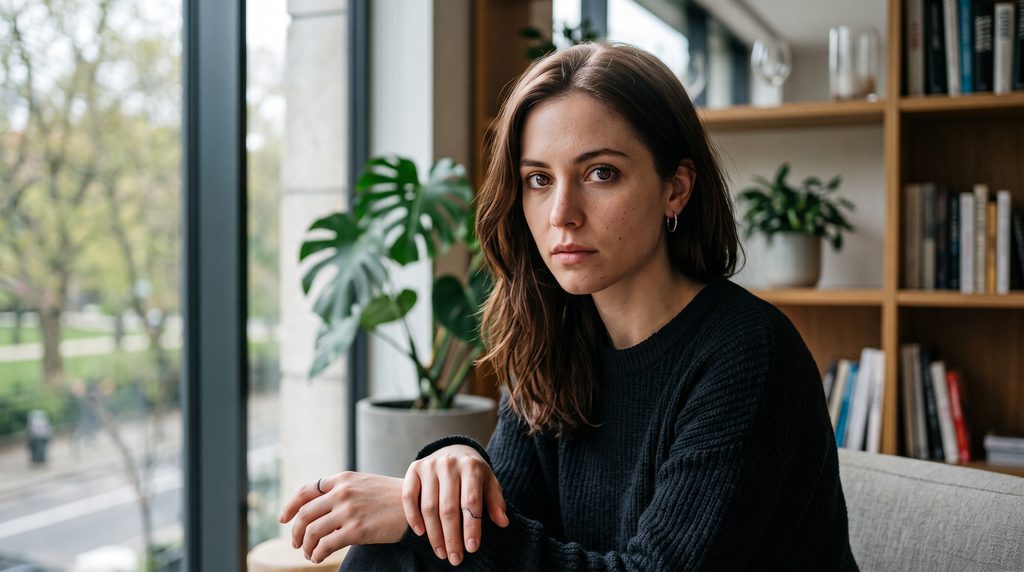
Faces are another area where AI-generated images can be extremely convincing while still containing subtle mistakes.
A face may look natural from a distance but appear slightly unusual when examined closely.
Examples can include:
- Asymmetrical eyes
- Unnatural teeth
- Strange earrings
- Incorrect glasses
- Inconsistent facial details
- Unusual skin textures
- Hair that merges with nearby objects
These errors are often becoming less obvious as models improve.
However, the important point is that realism and accuracy are not exactly the same thing.
An image can feel realistic while still containing details that would be unlikely in a real photograph.
The Problem of Physical Consistency
Some AI image mistakes are not related to anatomy or text at all.
They involve physics.
For example, an AI-generated scene might show a reflection that does not perfectly match the object creating it. A shadow may point in a slightly incorrect direction. A glass object may have unusual transparency, or a person’s clothing may appear to merge into a nearby surface.
Humans normally understand physical relationships through experience.
We know that objects occupy space, light creates shadows, mirrors reflect their surroundings, and materials behave differently.
An AI model can learn visual patterns associated with these situations, but reproducing every physical relationship consistently is difficult.
This becomes particularly noticeable in complicated scenes.
Why AI Does Not “See” the World Like Humans
One of the biggest misunderstandings about AI images is assuming that the system understands a generated scene exactly as a person would.
A human looking at a bicycle understands that it has two wheels, a frame, handlebars, pedals, and other connected parts.
An AI model works differently.
It learns relationships from examples. During generation, it uses those learned patterns to predict what visual information should appear in the final result.
This distinction is important.
The model can produce a highly convincing bicycle without having human-like awareness of what a bicycle physically is.
That is one reason a generated image can appear correct overall while containing a strange small detail.
Training Data Plays a Major Role
The quality of an image-generation system depends heavily on the information it learned from.
Training datasets can contain photographs, illustrations, artwork, diagrams, and other visual material. The model learns patterns from these examples.
If certain concepts appear frequently and clearly, the system may become very good at generating them.
Less common situations can be more difficult.
Consider an unusual object photographed from an uncommon angle. There may be fewer examples showing exactly how that object should look from that perspective.
The model then has to generalize from related examples.
This can lead to creative but inaccurate results.
Training data also raises important questions about copyright, licensing, consent, attribution, and the use of creative work in machine-learning systems. These issues continue to influence discussions around generative AI.
AI Image Generation Is Getting Better at Fixing Its Own Mistakes
The technology is not standing still.
Developers are improving models so they can follow prompts more accurately, maintain object relationships, and produce more consistent details.
Image-editing features are also becoming increasingly important.
Instead of generating an entire image again, users can select a specific area and ask the system to modify it. This can be useful for fixing a hand, changing an object, removing an unwanted detail, or adjusting part of a background.
Some systems can also use reference images to maintain a more consistent subject or visual style.
These improvements suggest that the future of AI image creation may involve more than simply typing a prompt and waiting for a picture.
Users may increasingly combine generation, editing, reference images, and human review.
How to Spot an AI-Generated Image
Not every AI-generated image has obvious mistakes.
Some are extremely difficult to distinguish from photographs.
Still, several clues can be useful when examining an unfamiliar image.
Look closely at:
- Fingers and hands
- Teeth and eyes
- Small background objects
- Reflections and shadows
- Jewelry and accessories
- Repeated patterns
- Signs and written text
- Object edges
- Unusual physical interactions
A useful technique is to zoom into the image rather than judging it from a thumbnail.
The most convincing part of an image may be the overall composition, while the errors are hidden in small details.
However, visual inspection alone is not always enough. As image-generation technology improves, determining whether an image is synthetic may increasingly require metadata, provenance systems, or specialized detection methods.
The Growing Importance of Authenticity
The ability to create realistic images has many legitimate uses.
Designers can create concepts quickly. Marketing teams can explore visual ideas. Game developers can experiment with environments. Educators can create illustrations, and ordinary users can turn creative ideas into images without professional design software.
At the same time, realistic synthetic media creates new challenges.
A fake photograph can potentially be used to spread misinformation, impersonate people, manipulate public opinion, or create misleading content.
This makes image authenticity increasingly important.
Technology companies, researchers, and standards organizations are exploring ways to attach information about how digital content was created or modified. Such systems could eventually help people understand whether an image came from a camera, an AI system, or a combination of both.
What the Future of AI Image Generation Could Look Like
The biggest improvement may not simply be better-looking pictures.
Future systems are likely to become better at consistency.
Instead of producing a visually attractive image with occasional strange details, models could become more reliable at maintaining the same character, object, lighting conditions, perspective, and physical relationships throughout a scene.
Prompt understanding should also continue to improve.
Users may eventually be able to describe complicated scenes with precise instructions about camera position, object placement, materials, lighting, and movement.
AI-generated images may also become more closely connected with video-generation systems, 3D tools, design applications, and virtual environments.
That could turn AI image creation from a simple image generator into a broader creative workflow.
Final Thoughts
AI image generation has already reached a point where computers can create pictures that look remarkably realistic. AI image generation has already reached a point where computers can create pictures that look remarkably realistic. But realistic appearance does not mean perfect understanding.
Strange hands, distorted text, unusual reflections, and inconsistent objects reveal an important limitation: these systems generate visual patterns based on what they have learned rather than experiencing the physical world like humans.
As models improve, many of today’s obvious mistakes will probably become less common. The more interesting challenge will be making generated content not only beautiful but also consistent, controllable, trustworthy, and clearly identifiable when necessary.
For users, the best approach is simple: enjoy the creative possibilities, but inspect important images carefully before assuming they represent reality.