
7 Exciting AI Technology Trends Shaping the Future in 2026
Artificial intelligence has moved from being a specialized technology to becoming part of everyday digital experiences. People can now encounter AI when searching for information, editing photographs, writing documents, communicating with software, or using connected devices.
Businesses are also experimenting with intelligent systems to automate repetitive work, analyze information, improve customer experiences, and develop new products.
As the technology continues to mature, several AI technology trends are becoming particularly important. Some are focused on making AI more useful, while others address performance, privacy, automation, and the growing relationship between humans and intelligent software.
Understanding these developments can help consumers and businesses make better decisions about the technologies they adopt. Following major AI technology trends can also help people understand where the technology industry may be heading.
What Are AI Technology Trends?
AI technology trends are emerging developments that show how artificial intelligence is changing, improving, or being applied in new areas.
These developments can involve software, computer hardware, robotics, data processing, automation, security, and consumer products.
Not every new AI feature represents a major technological breakthrough. Some developments may simply improve an existing product, while others could influence how people interact with computers for years.
For users, the most important question is often not whether a product contains AI, but what the technology actually helps it accomplish.
1. AI Assistants Are Becoming More Capable
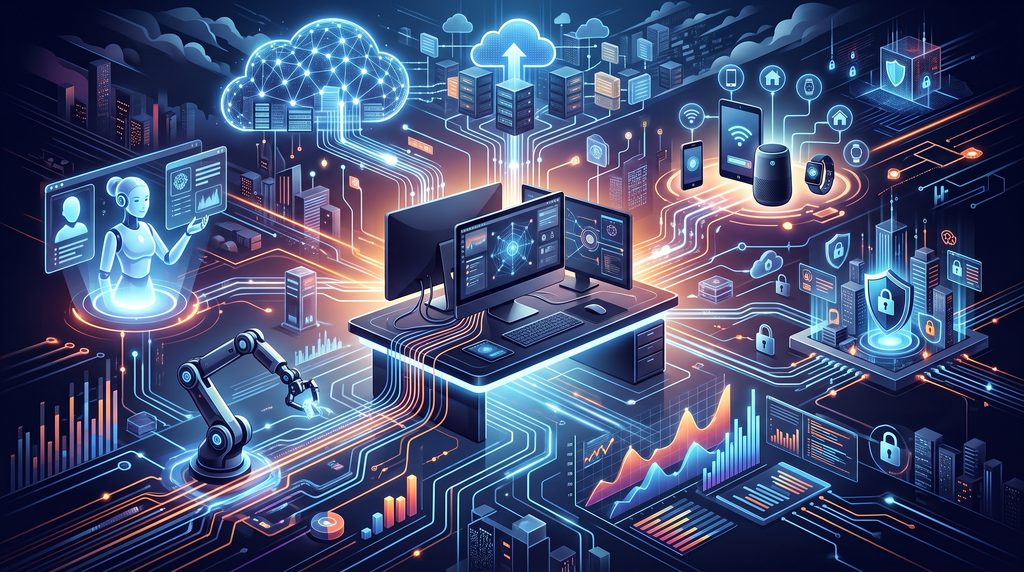
One of the most noticeable developments is the growing capability of AI assistants.
Earlier digital assistants were mainly designed to respond to simple commands. Modern systems can handle more complex conversations, summarize information, help with writing, analyze documents, and assist with different types of tasks.
The direction of development is also moving toward systems that can complete multiple steps instead of simply answering individual questions.
For example, an assistant could potentially help organize information, prepare a draft, analyze a document, and support a workflow within the same interaction.
However, users should still review important information generated by AI because intelligent systems can sometimes produce inaccurate or incomplete results.
The goal is therefore not necessarily to replace human decision-making but to make certain tasks faster and easier.Businesses should evaluate AI technology trends according to practical benefits rather than adopting every new development.
2. AI Is Moving Closer to the Device
Traditionally, many AI services depended heavily on remote data centers.
A device would send information to a server, the server would process the request, and the result would then be returned to the user.
Another important development is on-device AI, where certain tasks can be processed directly on smartphones, laptops, cameras, and other hardware.
This approach can provide potential advantages in speed, offline functionality, and privacy.
For example, a smartphone may be able to perform certain image-processing or language-related tasks without sending every piece of information to a remote server.
The exact benefits depend on the hardware and software involved, but more capable processors are making local AI processing increasingly practical.

3. AI-Powered Automation Is Expanding
Automation has always been an important goal of computing, but artificial intelligence can make automated systems more adaptable.
Traditional automation often follows predefined instructions. AI-powered systems can potentially analyze information, recognize patterns, and make decisions based on changing circumstances.
Businesses may use these capabilities for tasks such as customer support, document processing, data analysis, software development, and workflow management.
For example, an organization might use an intelligent system to categorize incoming requests before directing them to the appropriate department.
This can reduce repetitive work and allow employees to spend more time on tasks that require judgment and creativity.
Nevertheless, automated systems should be monitored carefully, particularly when they are involved in important business or customer decisions.
4. AI and Robotics Are Coming Together
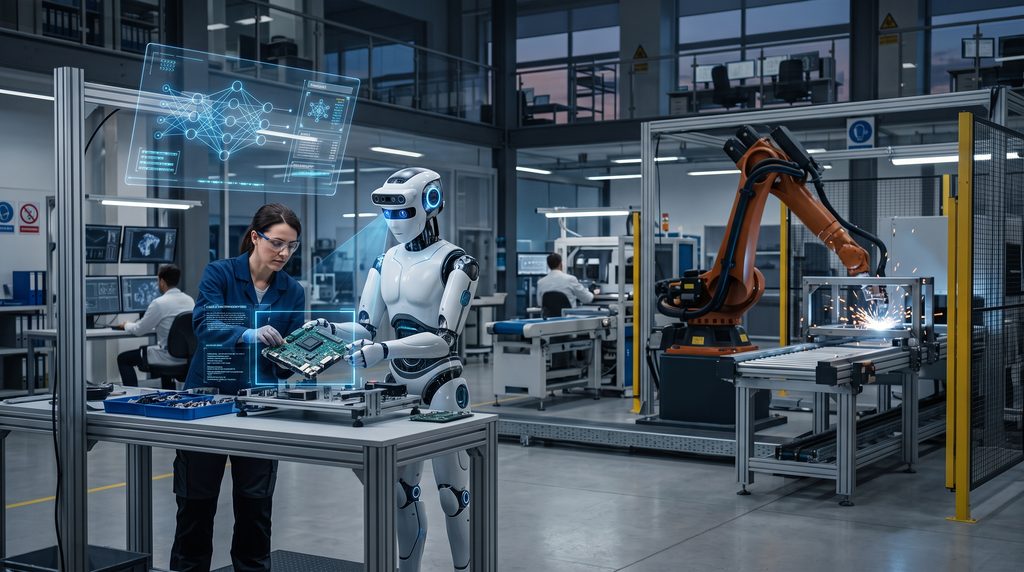
Robotics is another area where artificial intelligence can have a significant impact.
Traditional robots are often designed for highly controlled environments and specific repetitive tasks. AI can potentially make robotic systems more capable of interpreting surroundings and responding to changing conditions.
This combination is being explored in areas such as manufacturing, logistics, healthcare, agriculture, transportation, and household technology.
AI-powered robots may eventually become better at navigating environments, recognizing objects, and interacting with people.
However, widespread adoption will depend on factors such as reliability, cost, safety, energy consumption, and the ability to operate consistently in real-world environments.
5. AI Is Changing Cybersecurity
Cybersecurity teams handle enormous amounts of information, making automation and intelligent analysis increasingly useful.
AI systems can help identify unusual activity, analyze large datasets, detect suspicious patterns, and prioritize potential security threats.
For example, an intelligent security system may identify behavior that appears unusual compared with a user’s normal activity.
At the same time, AI can also create new challenges for cybersecurity.
Attackers may use intelligent tools to create more convincing phishing messages, automate certain attacks, or discover vulnerabilities more efficiently.
This means the relationship between AI and cybersecurity is likely to remain a two-sided competition.
Organizations will need strong security practices, human oversight, regular updates, and appropriate monitoring as intelligent technologies become more widespread.
6. AI Is Becoming Part of Everyday Consumer Products
Artificial intelligence is increasingly appearing in products that people use every day.
Smartphones, laptops, cameras, headphones, televisions, and home devices can now include AI-related features. Many of these features rely on machine learning to recognize patterns, process information, or improve results.
These features may help with photography, noise reduction, translation, search, writing assistance, recommendations, or device automation.
The challenge for consumers is determining whether an AI feature provides genuine value.
A product should not automatically be considered better simply because it has an AI label.
Before buying a device, consumers should consider performance, privacy, software support, compatibility, battery life, and whether the intelligent features actually solve a problem they experience.

7. Responsible AI Is Becoming More Important
As artificial intelligence becomes more powerful and widespread, questions about responsible use are becoming increasingly important.
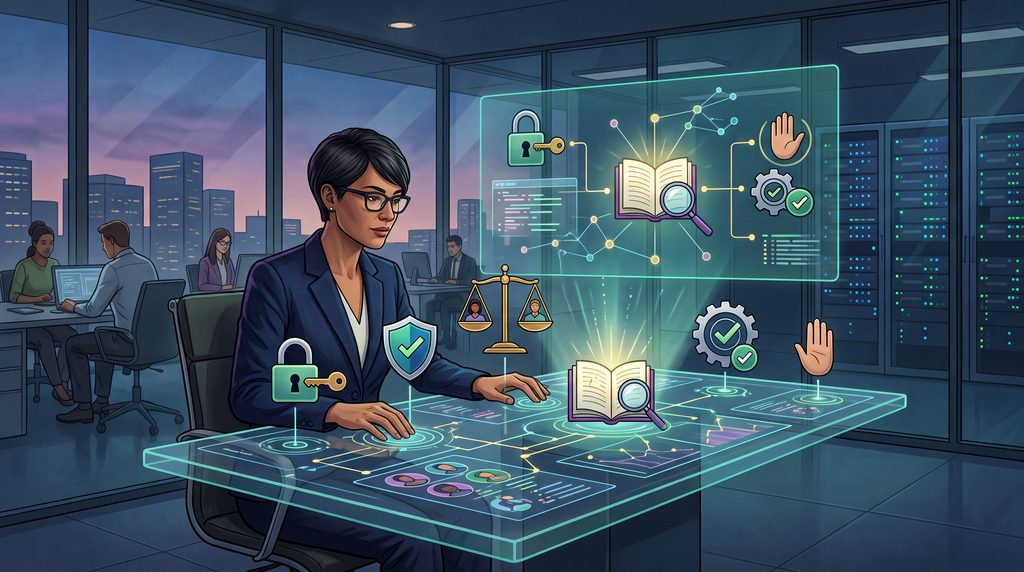
AI systems can process large amounts of information and influence decisions, which creates concerns around privacy, security, accuracy, transparency, and fairness.
Organizations need to consider how information is collected, how systems are trained and evaluated, and how users can understand or challenge important decisions.
Human oversight can also be valuable when AI is used in areas where mistakes could have serious consequences.
Responsible AI is therefore not only a technical issue. It can also involve company policies, user education, transparency, security practices, and appropriate governance.
How AI Technology Could Affect Everyday Life
The influence of artificial intelligence may become less noticeable as it becomes integrated into ordinary software and devices.
Instead of opening a separate AI application, people may interact with intelligent features directly through their phones, computers, vehicles, home devices, and workplace software.
For example, an AI system might help organize a schedule, summarize a long document, improve a photograph, translate a conversation, or automate a repetitive workflow.
The biggest changes may therefore come from integration rather than individual AI products.
However, users will still need to understand what information these systems access and how that information is handled.
What Businesses Should Consider Before Adopting AI
Businesses should avoid adopting AI simply because it is popular.
A better starting point is identifying a genuine problem that the technology could help solve.
Before implementing an AI system, organizations can consider:
- What task needs improvement?
- How accurate does the system need to be?
- What information will it access?
- How will sensitive data be protected?
- Who will review its output?
- How will performance be measured?
- What happens when the system makes a mistake?
A small pilot project can sometimes be more useful than immediately introducing AI across an entire organization.
Testing the technology in a controlled environment allows businesses to evaluate costs, benefits, risks, and practical limitations.
The Future of AI Technology Trends
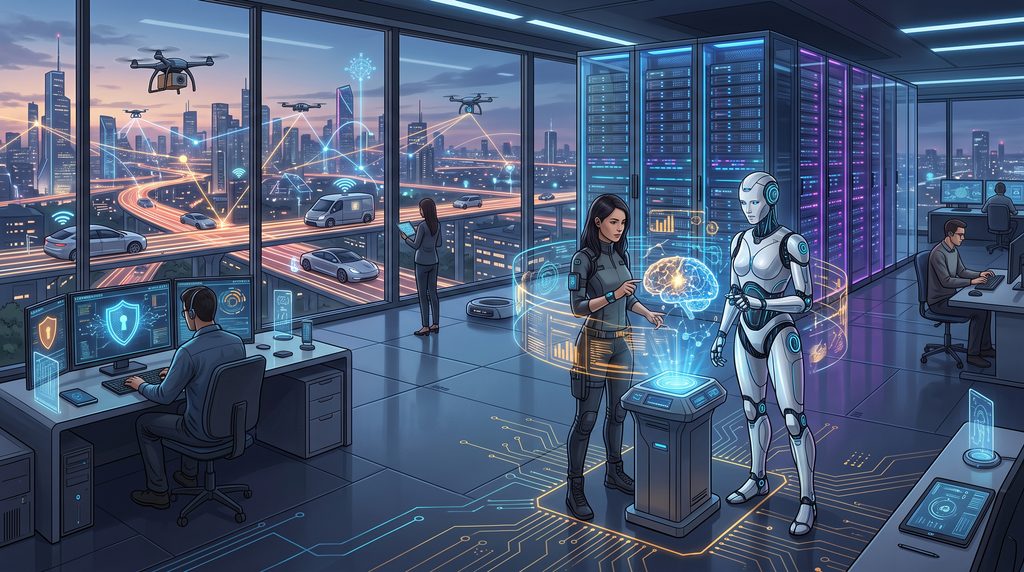
The future of AI technology trends will likely involve greater integration between intelligent software, hardware, cloud services, robotics, and connected devices.
AI assistants may become more capable of completing multi-step tasks, while local processing could make certain applications faster and more private.
Robotics may also benefit as machines become better at understanding physical environments.
At the same time, security, privacy, transparency, and responsible development will remain important.
The technology is developing quickly, but not every predicted breakthrough will become mainstream. Real-world usefulness, cost, reliability, and public acceptance will ultimately influence which innovations succeed.
Final Thoughts
The latest AI technology trends show that artificial intelligence is becoming increasingly integrated into software, hardware, business processes, cybersecurity, robotics, and consumer products.
AI assistants are becoming more capable, local processing is expanding, automation is becoming more adaptable, and intelligent systems are being explored across many industries.
At the same time, technological progress needs to be balanced with privacy, security, transparency, and human oversight. Keeping up with important AI technology trends can help consumers and businesses prepare for changes in the technology landscape.