
7 Exciting Emerging Technologies That Could Shape the Future in 2026
Technology rarely changes in one dramatic moment. More often, progress happens through a series of improvements that gradually make new ideas practical.
A technology may begin as an experimental concept in a research laboratory and eventually become part of a smartphone, workplace, vehicle, factory, or home. This transition can take years, and not every promising invention reaches widespread adoption.
In 2026, several emerging technologies are attracting attention because they could influence computing, communication, healthcare, manufacturing, transportation, and everyday digital experiences.
Some are still developing, while others are beginning to move from research environments into practical applications. Understanding these technologies can help businesses and consumers separate genuine opportunities from short-lived hype.
What Are Emerging Technologies?
Emerging technologies are developing technologies that have the potential to create new products, services, processes, or ways of solving problems.
They are often still evolving, which means their capabilities, costs, and practical applications can change quickly.
Examples include quantum computing, advanced robotics, spatial computing, next-generation connectivity, biotechnology, and new forms of energy technology.
However, being described as an emerging technology does not mean that mass adoption is guaranteed.
A technology must usually overcome challenges involving cost, reliability, infrastructure, regulation, safety, and public acceptance before it can become mainstream.
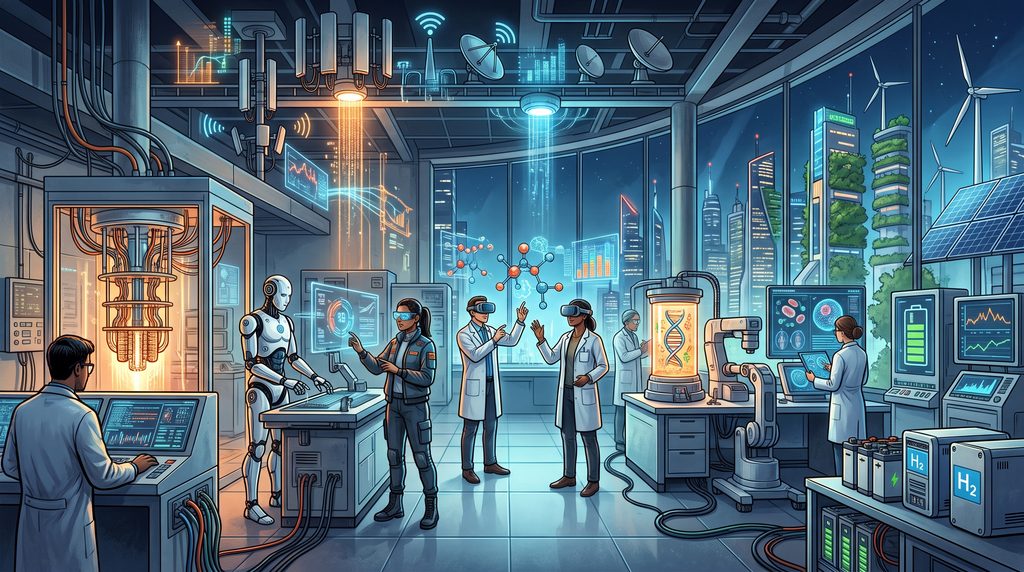
1. Quantum Computing Could Transform Complex Computing
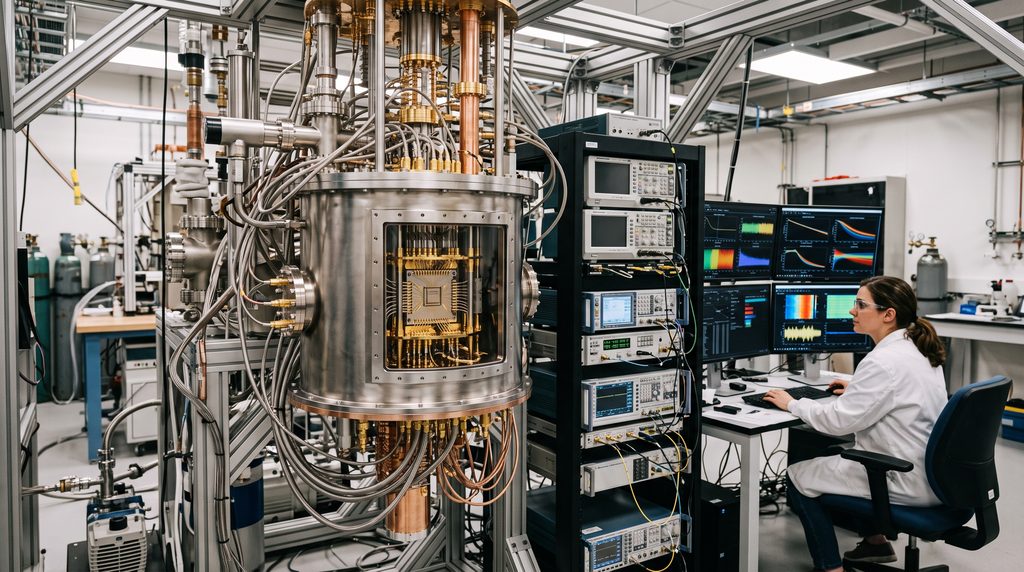
Traditional computers process information using bits that represent binary states. Quantum computers use a different approach based on quantum-mechanical principles.
Quantum computers use a different approach based on quantum-mechanical principles. This could allow certain types of problems to be handled in ways that are fundamentally different from conventional computing.
Potential applications include areas such as
- Scientific research
- Drug discovery
- Materials development
- Optimization
- Cryptography
- Complex simulations
Quantum computing is still an evolving field, and practical systems face significant technical challenges.
Researchers are working on improving reliability, reducing errors, and developing useful applications that justify the complexity of quantum hardware.
For most consumers, quantum computers are unlikely to replace ordinary laptops or smartphones. Instead, they could eventually operate alongside conventional systems to tackle specialized problems.
2. Advanced Robotics Is Moving Into More Environments
Robots have traditionally been associated with factories, where they perform repetitive and highly controlled tasks.
Modern robotics is becoming more flexible.
Advances in artificial intelligence, computer vision, sensors, batteries, and mechanical design are helping robots operate in environments that are less predictable.
This could expand their use in:
- Warehouses
- Hospitals
- Agriculture
- Construction
- Manufacturing
- Delivery services
- Domestic environments
The combination of robotics and AI is particularly interesting because machines can potentially interpret information from their surroundings and respond to changing conditions.
Still, real-world robotics faces challenges involving safety, cost, maintenance, energy consumption, and reliability.
The most successful applications will likely be those where robots can provide clear benefits rather than simply demonstrating impressive technology.
3. Spatial Computing Could Change Digital Interaction
Spatial computing combines digital information with physical surroundings.
Instead of interacting with software only through a traditional monitor or smartphone display, users can experience digital objects within a three-dimensional environment.
Virtual reality, augmented reality, and mixed reality are examples of technologies related to this broader concept.
Possible applications include:
- Training
- Education
- Product design
- Gaming
- Remote collaboration
- Engineering
- Medical visualization
For example, an engineer could examine a three-dimensional model before a physical product is manufactured.
However, comfortable hardware, affordable pricing, battery life, software availability, and ease of use will influence whether spatial computing becomes common among everyday users.

4. Next-Generation Connectivity Could Improve Connected Devices
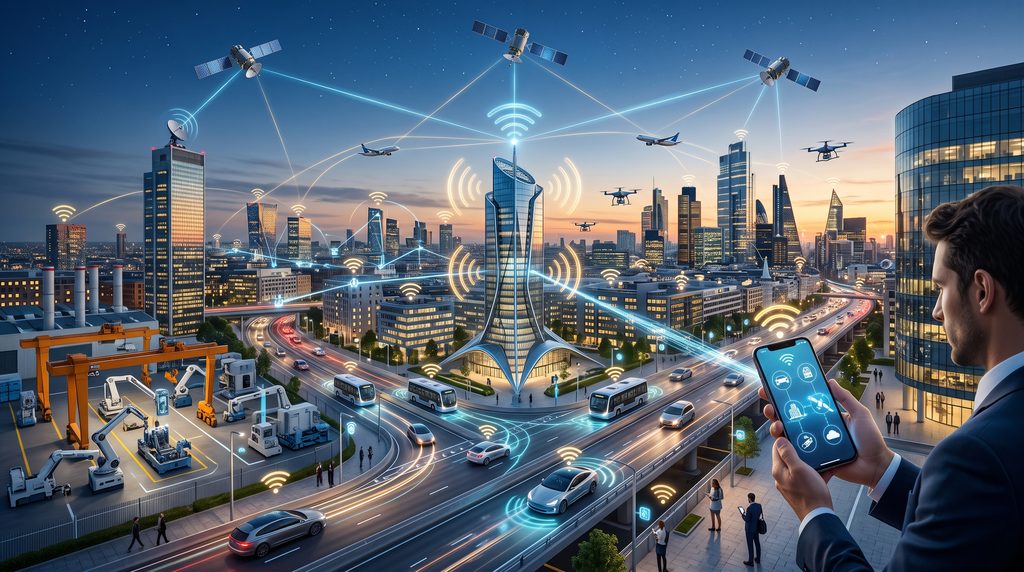
Internet connectivity continues to evolve as demand for faster communication and connected services increases.
Future networks could support more connected devices, lower response times, and improved communication between machines.
This matters because technologies such as autonomous systems, smart factories, connected vehicles, and large-scale IoT networks may require reliable communication between many devices.
Faster connectivity alone, however, does not automatically create better technology.
Network coverage, infrastructure costs, device compatibility, security, and energy consumption all influence the practical value of new connectivity standards.
As connected systems expand, protecting those networks will become increasingly important.
5. Biotechnology Could Change Healthcare and Research
Biotechnology combines biological knowledge with technology to develop new methods, products, and treatments.
Advances in areas such as genetic research, laboratory automation, bioengineering, and computational biology are creating new possibilities.
Technology can help researchers analyze biological information more efficiently and explore potential solutions to complex medical problems.
Emerging applications may involve:
- Drug research
- Diagnostic tools
- Genetic analysis
- Laboratory automation
- Personalized medicine
- Agricultural biotechnology
This field also involves important ethical and regulatory considerations.
Scientific progress must be supported by rigorous testing, appropriate oversight, safety standards, and responsible handling of sensitive biological information.
6. New Energy Technologies Could Support a More Efficient Future
Energy technology is another area experiencing significant development.
Researchers and companies are exploring improved batteries, alternative energy systems, advanced solar technologies, energy storage, and other approaches that could help meet growing energy demands.
Better energy storage could be particularly valuable because renewable electricity generation can vary depending on weather and time of day.
Improved batteries may also affect electric vehicles, portable electronics, industrial systems, and large-scale energy infrastructure.
However, energy technologies need to be evaluated beyond laboratory performance.
Manufacturing costs, material availability, durability, recycling, infrastructure, and environmental impact can all determine whether an innovation becomes commercially successful.

7. Intelligent Edge Computing Could Bring Processing Closer to Users
Cloud computing has changed how applications store and process information, but not every task needs to be handled in a distant data center.
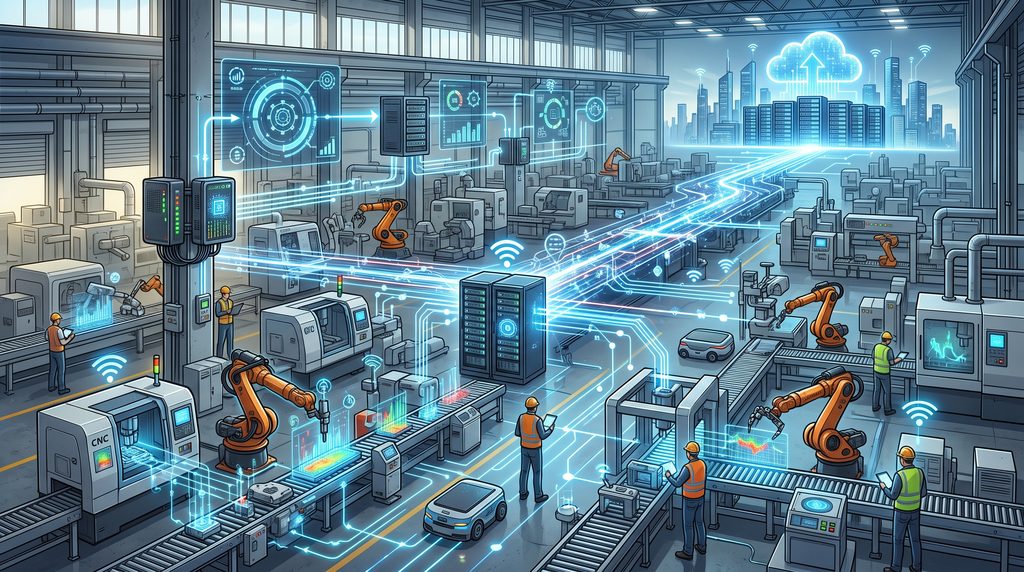
Edge computing moves certain processing capabilities closer to where data is generated. Some edge systems can also use machine learning to analyze information locally and respond to changing conditions.
This can be useful for applications that require rapid responses.
Examples could include:
- Smart factories
- Autonomous vehicles
- Security systems
- Industrial sensors
- Connected healthcare devices
- Smart cities
When information can be processed locally or closer to the source, systems may reduce delays and limit the amount of data that needs to travel to remote servers.
This approach does not mean cloud computing will disappear. Instead, future systems may combine cloud infrastructure with local and edge processing depending on the requirements of each application.
How Businesses Can Evaluate Emerging Technologies
Businesses should be careful about adopting a new technology simply because it is receiving attention.
A practical evaluation can begin with a simple question:
What problem will this technology solve?
Companies should then consider whether the expected benefits justify the investment.
Important factors can include:
- Implementation cost
- Required infrastructure
- Employee training
- Security risks
- Reliability
- Scalability
- Regulatory requirements
- Long-term maintenance
Testing a technology through a limited pilot project can also reduce unnecessary risk.
This allows organizations to understand how a system performs in real conditions before making a larger investment.
Why Emerging Technologies Do Not Always Succeed
The history of technology contains many examples of promising ideas that failed to achieve widespread adoption.
A technology can be technically impressive but still struggle because it is too expensive, difficult to use, unreliable, or poorly supported.
Consumer expectations can also change quickly.
For this reason, businesses should avoid assuming that every new technology will become mainstream.
Long-term adoption usually depends on practical value.
If a technology makes something faster, safer, cheaper, easier, or more accessible, it has a stronger reason to survive beyond the initial excitement.
The Future of Emerging Technologies
The future of emerging technologies will probably involve greater interaction between different fields rather than isolated developments.
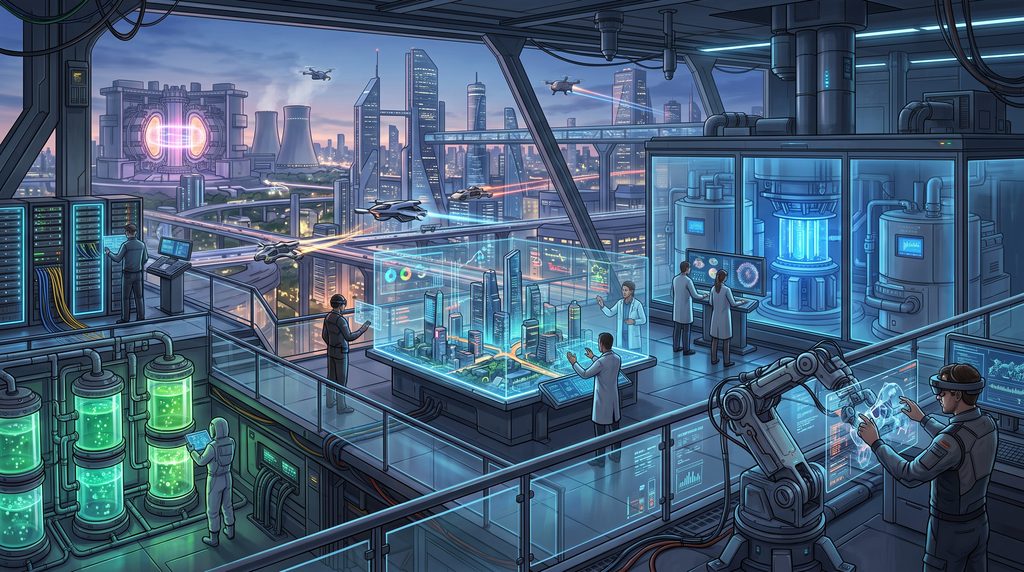
Artificial intelligence may work alongside robotics. Edge computing may support connected devices. Spatial computing may use advanced networks. New energy systems may provide power for increasingly connected infrastructure.
This convergence could create applications that are difficult to predict today.
At the same time, responsible development will remain essential.
Privacy, cybersecurity, safety, environmental impact, affordability, and accessibility should all be considered as new technologies move from laboratories into everyday life.
Final Thoughts
The most interesting emerging technologies are not necessarily the ones with the most impressive demonstrations.
Their long-term importance will depend on whether they can solve meaningful problems and operate reliably outside controlled environments.
Quantum computing could address specialized computational challenges, robotics could automate physical tasks, spatial computing could change digital interaction, and advanced connectivity could support increasingly connected systems.
Meanwhile, biotechnology, energy innovation, and edge computing could influence healthcare, sustainability, and digital infrastructure.
For consumers and businesses, the best approach is to stay informed without assuming that every new technology will become mainstream.
The technologies that combine practical usefulness, reasonable costs, reliability, security, and responsible development are the ones most likely to have a lasting impact.