7 Powerful Software and App Trends Changing the Digital World in 2026
Software has become an essential part of modern digital life. From communication and entertainment to business, education, banking, and content creation, people interact with applications almost every day.
However, the software industry is changing quickly. Developers are experimenting with artificial intelligence, cloud platforms, automation, privacy-focused technologies, and new approaches to building applications.
These developments are changing not only how software is created but also how people interact with digital services.
Understanding the latest software and app trends can provide a clearer picture of where the technology industry may be heading in 2026. Following software and app trends can help readers understand how digital products are changing.
1. AI Is Becoming Part of Everyday Software
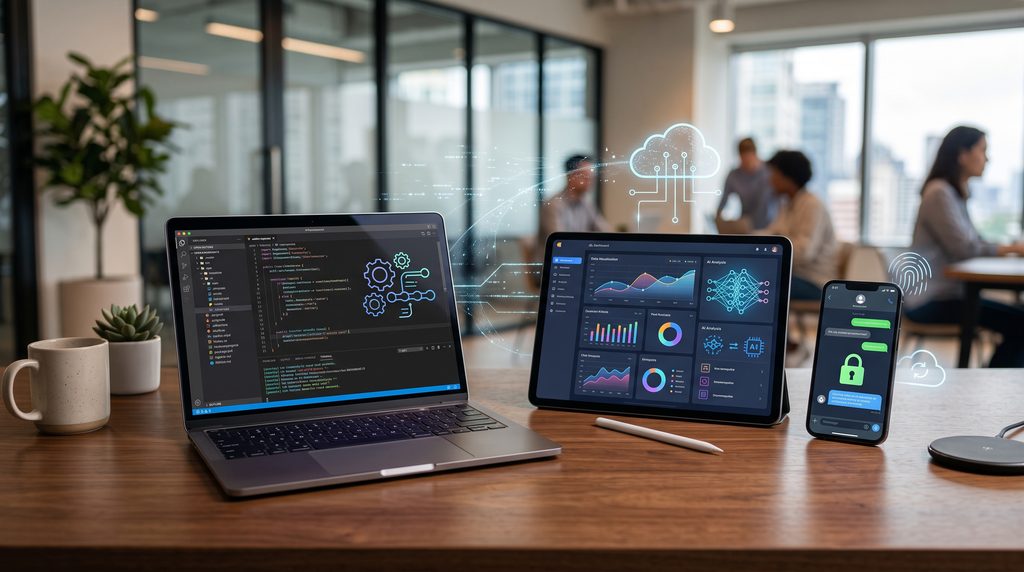
Artificial intelligence is moving from specialized tools into mainstream applications.
Many software developers are adding AI-powered features to products that users already understand, rather than creating completely separate AI platforms.
Writing applications can provide drafting assistance, image editors can automate certain editing tasks, and productivity platforms can help organize information.
AI can also be integrated into customer support systems, search tools, development environments, and business applications.
Another important development is the ability of software to understand different types of information.
Modern applications can increasingly work with combinations of text, images, audio, and other data.
This could lead to more natural interactions between users and software.
However, AI integration also raises questions about accuracy, privacy, and how much control users should have over automated features.
The technology is developing rapidly, so the quality of AI features can vary significantly between applications. Many AI-powered applications rely on machine learning to recognize patterns and improve specific tasks. AI integration is likely to remain one of the biggest software and app trends in the coming years. Software and app trends are also influencing how developers design modern digital products.
2. Cloud Software Continues to Change How Applications Work
Cloud computing has changed the traditional idea of installing software on a single computer.
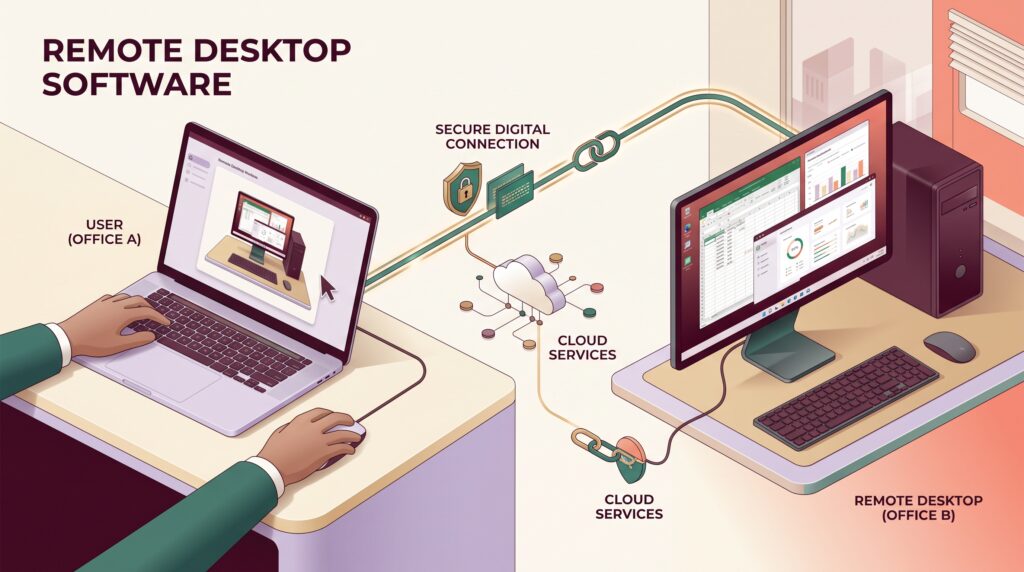
Many applications now process and store information through online infrastructure, allowing users to access their work from multiple devices.
Cloud-based software can also make collaboration easier because several people may be able to work with the same information without manually transferring files between computers.
Businesses have increasingly adopted cloud platforms for communication, document management, storage, analytics, and other operations.
For consumers, cloud technology is often visible through services such as online storage, streaming platforms, web applications, and synchronized data.
At the same time, dependence on cloud infrastructure creates new considerations around privacy, service availability, internet connectivity, and data management.
As these systems mature, developers will continue looking for ways to balance convenience with security and reliability. Cloud platforms are therefore an important part of the software and app trends shaping modern applications.
3. Low-Code and No-Code Development Are Expanding
Building software traditionally required programming knowledge and technical expertise.
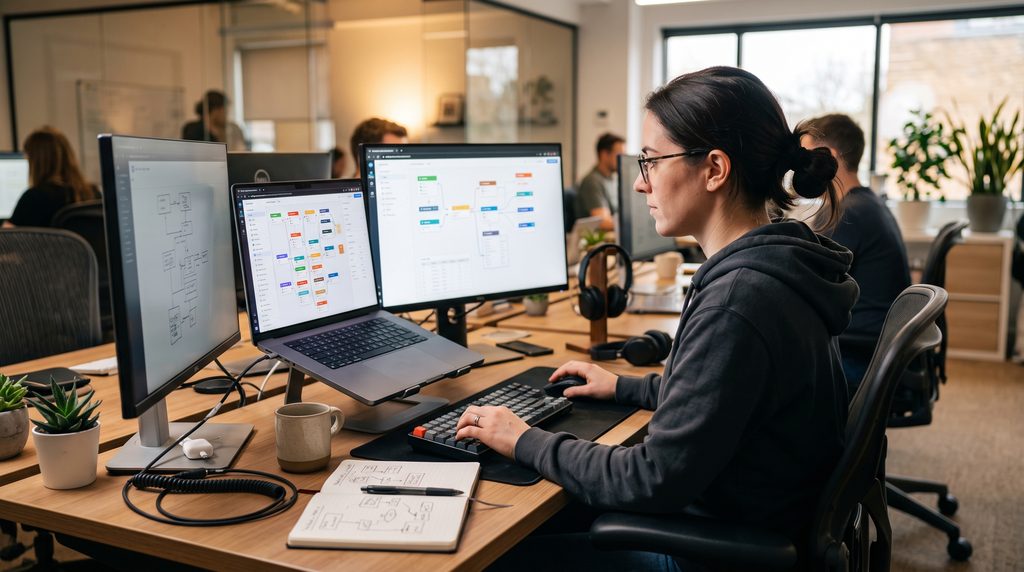
Low-code and no-code platforms are changing that model by allowing users to create certain applications with visual interfaces and pre-built components.
Instead of writing every part of an application manually, users can sometimes arrange workflows, forms, databases, and automation through graphical tools.
This does not mean traditional programming is becoming unnecessary.
Complex applications still require experienced developers, particularly when performance, security, scalability, and custom functionality are important.
However, visual development platforms can make software creation more accessible for small businesses, teams, educators, and individuals.
They may also allow professional developers to build certain internal tools more quickly.
The growing popularity of these platforms is one of the more interesting software and app trends because it could broaden who gets to participate in software development.
4. Cross-Platform Apps Are Becoming More Common
Users now move between smartphones, laptops, tablets, smart displays, and other connected devices.
This has increased demand for applications that provide a consistent experience across multiple platforms.
Developers can use modern frameworks and development tools to create software that works across different operating systems while reducing the amount of completely separate code required.
Cross-platform development can also help businesses maintain features and updates across several versions of an application.
However, creating a good cross-platform experience is not simply about making the same interface appear everywhere.
Different devices have different screen sizes, input methods, performance characteristics, and operating-system features.
Successful applications therefore need to provide consistency without ignoring the strengths of each platform.
This approach is likely to remain important as users continue to expect their data and applications to follow them across devices.
5. Privacy Is Becoming a Bigger Software Priority
People are becoming more aware of how applications collect and process personal information.
Software may have access to contacts, photographs, location information, microphones, cameras, browsing activity, and other data depending on the permissions granted by users.
As privacy concerns increase, developers are paying greater attention to data minimization, permission controls, encryption, and transparent privacy policies.
Some applications are also moving certain processing tasks closer to the user’s device.
This can potentially reduce the amount of information that needs to be transferred to remote servers.
Privacy-focused design does not mean an application cannot collect any information.
Instead, the goal is to provide clearer choices and ensure that data collection has a legitimate purpose.
For users, checking application permissions and privacy settings remains an important part of responsible software use.
6. Automation Is Moving Into More Everyday Applications
Automation is no longer limited to large industrial systems or specialized business software.
Everyday applications increasingly include automated workflows that can perform repetitive actions with limited user involvement.
Email platforms can organize messages, productivity tools can trigger tasks, and business software can automatically move information between connected services.
AI is also expanding what automation can accomplish.
Traditional automation generally follows predefined rules, while AI-assisted systems may be able to interpret information and make decisions within specific boundaries.
This could change how people manage repetitive digital work.
However, automated systems still need appropriate oversight.
An incorrect automated action can sometimes create problems more quickly than a manual process.
For that reason, good software design will likely combine automation with clear controls, review options, and user feedback.

7. Collaboration Software Is Becoming More Intelligent
Remote and hybrid work have changed how teams communicate and manage projects.
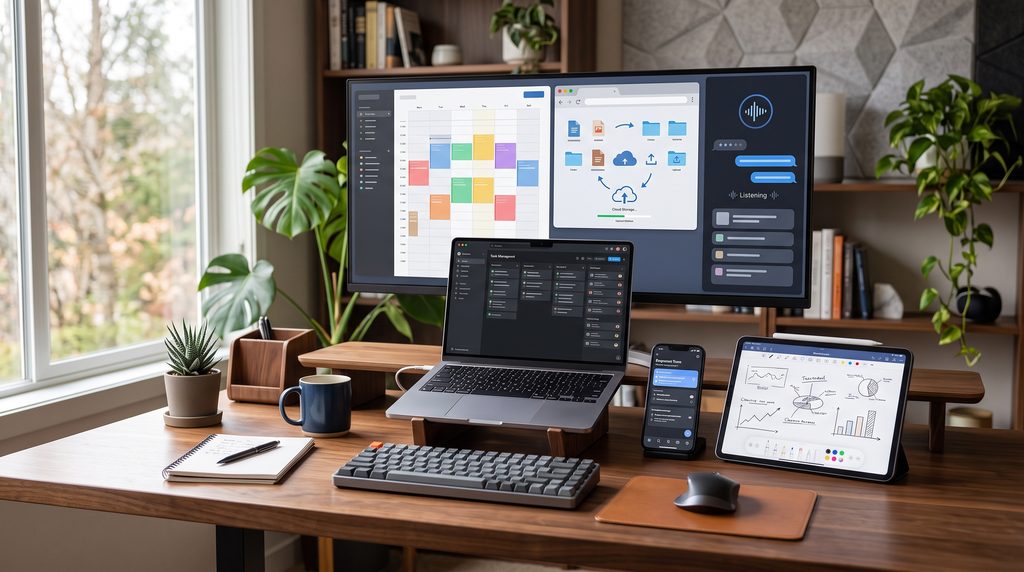
Collaboration platforms now combine messaging, video meetings, document sharing, task management, file storage, and project coordination in increasingly connected environments.
AI features are also being added to collaboration software.
Depending on the platform, these features may help summarize meetings, organize information, search through documents, or assist with routine tasks.
This could reduce some of the manual work involved in managing large amounts of digital communication.
However, collaboration software also needs to avoid creating unnecessary complexity.
Adding more features does not automatically produce a better experience.
The most successful platforms may be those that combine powerful capabilities with simple interfaces and clear workflows.
How Software Development Could Change
The software industry is moving toward a model in which applications are increasingly connected, intelligent, and adaptable.
Developers may rely on AI-assisted development tools to help with repetitive coding tasks, testing, documentation, and debugging.
Cloud infrastructure can provide flexible computing resources, while low-code platforms can help non-programmers build simpler solutions.
At the same time, privacy and security requirements are becoming more important as applications handle increasingly sensitive information.
These changes do not necessarily mean traditional development skills are becoming irrelevant.
Instead, developers may spend more time solving complex problems, designing systems, reviewing AI-generated work, and making important technical decisions.
What These Software Trends Mean for Users
The biggest change users may notice is that software is becoming less isolated.
Applications increasingly communicate with other services and devices.
A calendar can connect with email, a phone can synchronize with a laptop, and a productivity platform can connect with cloud storage and communication tools.
AI can add another layer by helping applications interpret information and perform tasks.
However, this connected approach also means users need to pay attention to permissions, account security, data sharing, and privacy settings.
Convenience is valuable, but users should understand what happens behind the interface.
The Future of Software and Apps
The next stage of software development will likely combine artificial intelligence, cloud computing, automation, connected devices, and privacy-focused design.
Applications may become more capable of understanding context and assisting with tasks without requiring users to navigate complicated menus.
At the same time, developers will need to address concerns surrounding security, reliability, data ownership, and responsible AI use.
The future is unlikely to be defined by one single technology.
Instead, several technologies will continue to interact and create new types of digital experiences. These software and app trends could influence how people interact with digital services in the future.

ALT Text: Future of software and application technology
Final Thoughts
The software industry is entering a period of significant change.
AI-powered features, cloud platforms, low-code development, cross-platform applications, privacy-focused design, automation, and intelligent collaboration tools are influencing how digital products are created and used.
Not every new feature will become a long-term success, but the overall direction is clear: software is becoming more connected, automated, and capable of adapting to different user needs.
For consumers and businesses, understanding these software and app trends can make it easier to follow technological developments and recognize which changes may have a lasting impact.
The most important developments may ultimately be the ones that make software more reliable, secure, transparent, and easier for people to control. Keeping track of software and app trends can help users understand where the software industry is heading.