Natural Language Processing Explained: How AI Understands Human Language
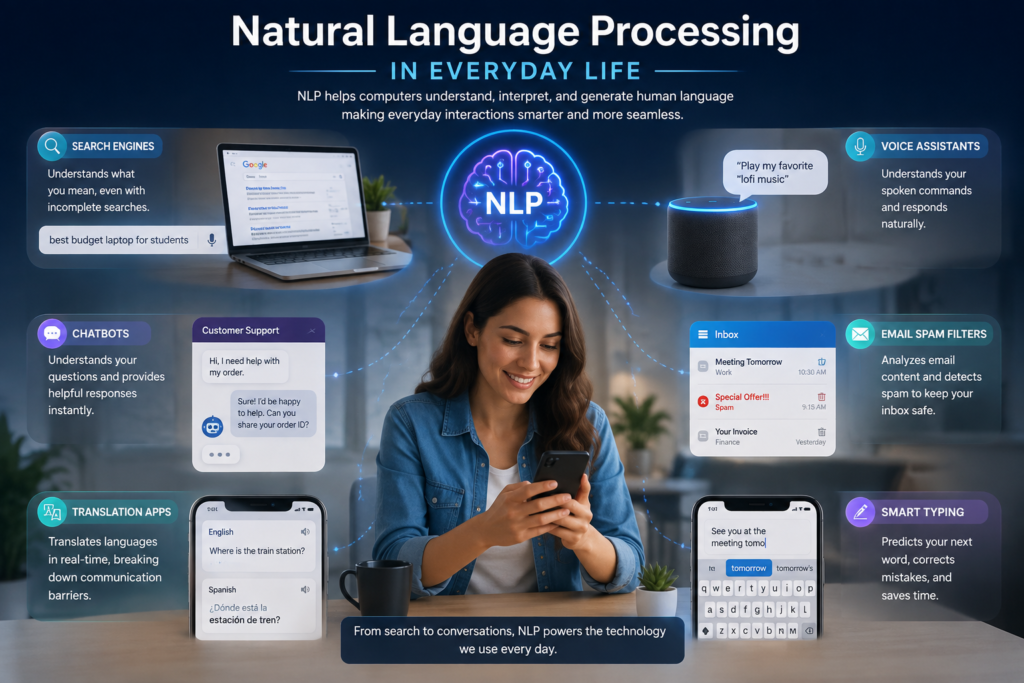
Have you ever searched for something on Google using incomplete words and still found exactly what you needed? Or noticed how your email automatically filters spam while your phone predicts the next word before you finish typing? These everyday experiences might seem ordinary, but they’re powered by one of the most influential technologies in artificial intelligence—Natural Language Processing (NLP).
Unlike humans, computers aren’t born with the ability to understand language. They don’t recognize humor, emotions, sarcasm, or context the way people do. To a computer, a sentence is simply a stream of characters until sophisticated AI models analyze it. Natural language processing was developed to bridge this gap, allowing machines to interpret human language in ways that are increasingly accurate and useful.
Over the last decade, NLP has quietly become a core technology behind search engines, AI assistants, banking platforms, healthcare software, cybersecurity systems, online shopping experiences, and enterprise business solutions. Instead of simply matching keywords, modern NLP systems attempt to understand what people actually mean, making digital communication faster, smarter, and more natural.
As businesses continue adopting artificial intelligence, the ability to process language efficiently has become a competitive advantage. Organizations now rely on NLP to improve customer experiences, automate repetitive tasks, analyze large volumes of information, and make faster business decisions.
The Challenge of Teaching Computers Human Language
Language is one of the most complicated things humans learn, yet most people rarely think about it. We naturally understand incomplete sentences, recognize different tones of voice, and even detect sarcasm without much effort.
Computers don’t have that ability.
If someone writes:
“That meeting was interesting.”
A human immediately understands that the meaning depends on context. It could be a compliment, criticism, or even sarcasm.
For a computer, however, understanding those hidden meanings requires advanced learning models trained on enormous amounts of text and conversation.
This challenge became the foundation of natural language processing. Rather than programming thousands of language rules manually, researchers developed AI systems capable of learning language patterns from millions of books, articles, conversations, websites, and documents.
The result is software that doesn’t simply read words—it learns relationships between them.
What Is Natural Language Processing?
Natural language processing is a specialized field of artificial intelligence that enables computers to understand, interpret, analyze, and generate human language.
Instead of treating text as isolated words, NLP focuses on identifying meaning, context, sentence structure, user intent, and relationships between different parts of language.
Modern NLP combines several technologies, including:
- Machine Learning
- Deep Learning
- Computational Linguistics
- Statistical Language Models
Together, these technologies allow computers to answer questions, summarize documents, translate languages, recognize speech, classify information, and even generate human-like responses.
Unlike older software that relied on fixed programming rules, today’s NLP systems continuously improve as they process larger and more diverse datasets.
From Words to Meaning: How NLP Has Changed
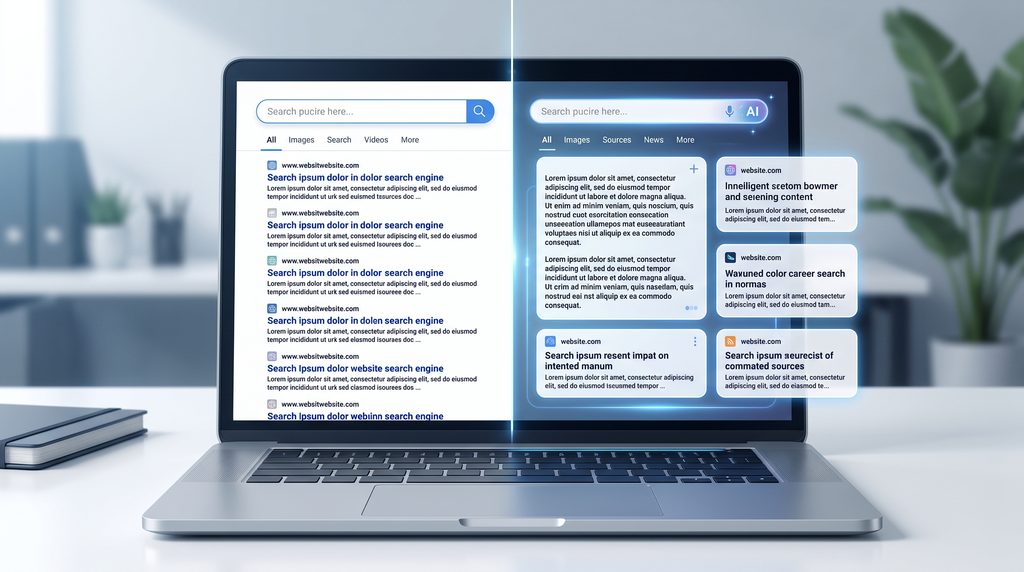
Earlier search engines mainly looked for exact keywords.
If someone searched for:
“cheap gaming laptop”
The system focused heavily on those exact words.
Modern NLP-powered search engines work differently.
Instead of asking,
“Which pages contain these words?”
they ask,
“What is the user really looking for?”
This shift from keyword matching to understanding intent has completely changed how search engines, virtual assistants, chatbots, and recommendation systems operate.
Today, AI systems can often recognize spelling mistakes, synonyms, conversational language, and even follow-up questions because natural language processing helps them understand context instead of isolated words.
How Natural Language Processing Works Behind the Scenes
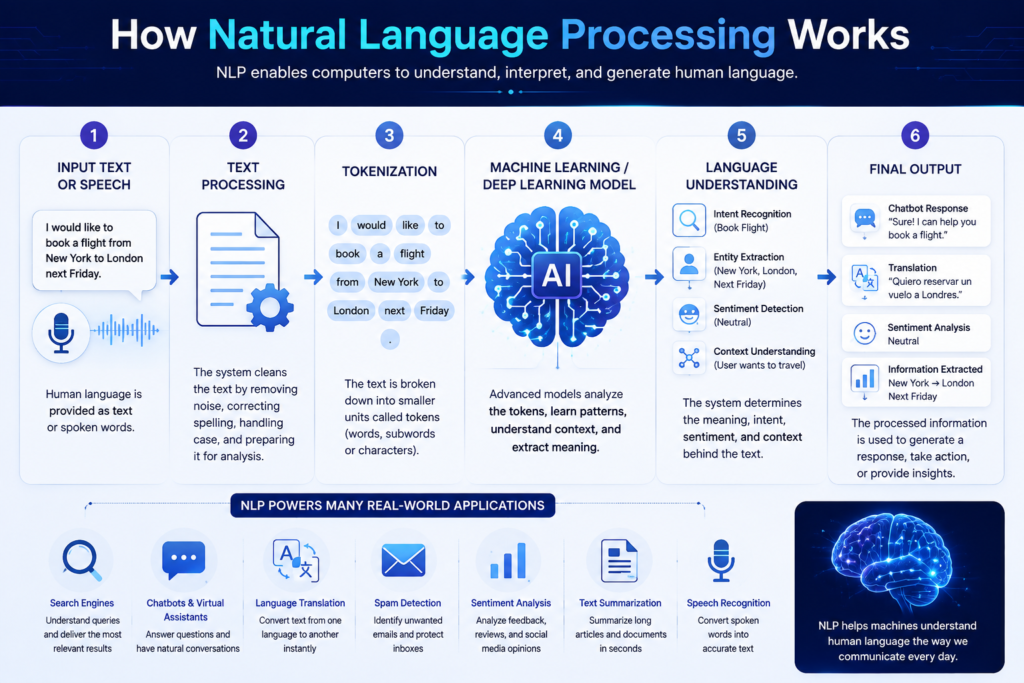
Whenever someone enters text into an AI-powered application, several processes begin almost instantly.
The system first prepares the text by removing unnecessary formatting and organizing the information into smaller pieces that can be analyzed efficiently.
It then studies grammar, sentence structure, relationships between words, and the overall context of the conversation.
Machine learning algorithms compare these language patterns with millions of examples seen during training. Instead of memorizing individual sentences, modern NLP systems recognize similar patterns, allowing them to respond intelligently even when they encounter completely new questions.
As additional language data becomes available, these AI models continue refining their understanding, gradually improving their accuracy and producing more reliable responses over time.
Where Natural Language Processing Is Quietly Reshaping Industries
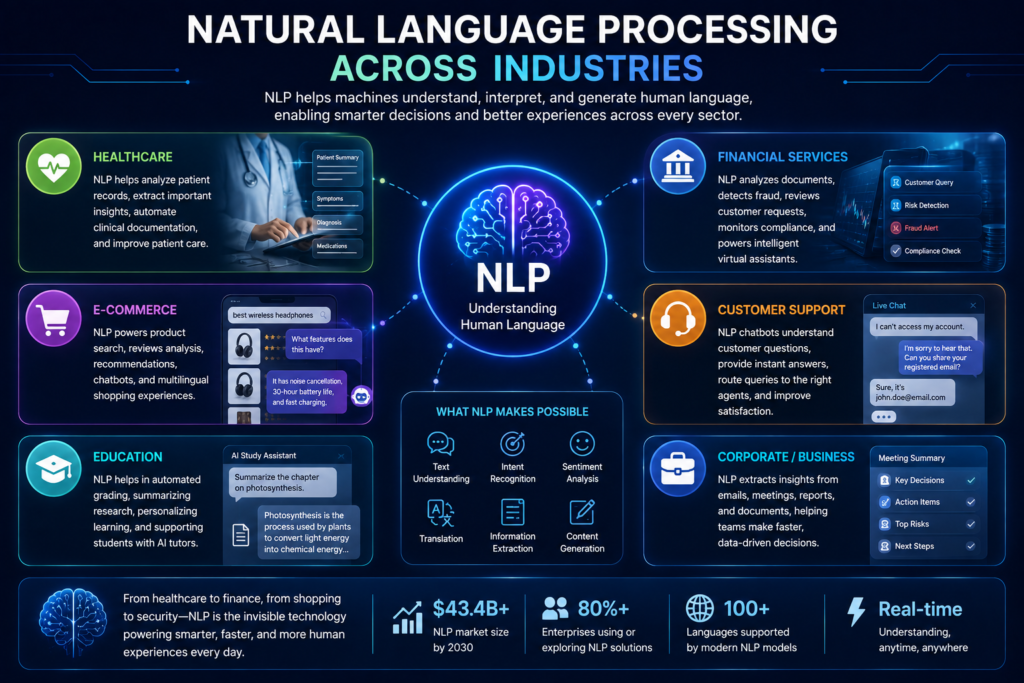
Natural language processing is no longer limited to technology companies. Today, it has become a practical business tool that helps organizations process information faster, improve customer experiences, and reduce manual work. Rather than replacing people, NLP is often used to support teams by handling repetitive language-based tasks that would otherwise consume valuable time.
Healthcare
Hospitals and healthcare providers generate enormous amounts of written information every day, including patient records, laboratory reports, prescriptions, and clinical notes. Reviewing these documents manually can be time-consuming.
NLP-powered systems help medical professionals organize patient information, summarize lengthy records, identify important details, and improve documentation accuracy. This allows healthcare staff to spend more time with patients instead of paperwork.
Financial Services
Banks process millions of emails, loan applications, customer requests, and financial documents every year.
Natural language processing helps financial institutions do the following:
- review customer communications
- detect suspicious activity
- organize financial documents
- improve virtual customer support
- simplify compliance reporting
Because financial organizations deal with sensitive information, NLP also supports risk management by identifying unusual communication patterns that may require further investigation.
Cybersecurity
Cybersecurity teams receive thousands of alerts every day. Many of them are false positives, making it difficult to identify genuine threats quickly.
Natural language processing assists security professionals by analyzing reports, emails, threat intelligence feeds, and security logs to identify patterns that deserve attention.
As cyber threats become more sophisticated, language-based AI is becoming increasingly valuable for modern security operations.
E-Commerce
Online retailers use NLP to improve nearly every stage of the customer journey.
When shoppers search for products using conversational language instead of exact product names, NLP helps understand their intent.
It also powers:
- intelligent product search
- automated customer support
- review analysis
- recommendation systems
- multilingual shopping experiences
Instead of relying only on keywords, online stores can better understand what customers are actually looking for.
Why Businesses Continue Investing in Language AI
The growing interest in natural language processing isn’t driven by trends alone. Organizations generate massive amounts of language data every day, and turning that information into useful insights has become a competitive advantage.
Companies are adopting NLP because it helps them:
- process information more efficiently
- improve customer interactions
- automate repetitive communication
- support multilingual operations
- analyze customer feedback faster
- make data-driven business decisions
Rather than replacing human expertise, NLP allows employees to focus on tasks that require creativity, judgment, and strategic thinking.
The Challenges That Still Need to Be Solved
Although natural language processing has advanced significantly, it isn’t perfect.
Human communication remains incredibly complex, and even the most advanced AI models occasionally misunderstand meaning.
Some common challenges include:
Understanding Context
A single word can have multiple meanings depending on the conversation. AI models sometimes struggle when context is limited.
Sarcasm and Humor
People frequently communicate indirectly. Detecting sarcasm, irony, or jokes continues to be difficult for many language models.
Language Diversity
Thousands of languages and regional dialects exist worldwide. High-quality training data isn’t equally available for every language, which can affect performance.
Privacy and Security
Many NLP applications process sensitive business or personal information. Organizations must ensure that language data is handled responsibly while complying with privacy regulations.
Despite these challenges, research continues improving the accuracy, safety, and reliability of modern language models.
What’s Next for Natural Language Processing?
The future of natural language processing is moving beyond simple conversations.
Researchers are building systems capable of understanding longer discussions, combining text with images, audio, and video, and supporting more natural collaboration between humans and AI.
Future developments are expected to include:
- more accurate multilingual communication
- stronger reasoning capabilities
- improved enterprise AI assistants
- industry-specific language models
- better privacy protection
- deeper integration with business software
As these improvements continue, natural language processing is likely to become a standard component of digital products rather than a specialized AI feature.
Final Thoughts
Most people interact with natural language processing every day without noticing it. Whether it’s searching the web, translating a document, filtering unwanted emails, or asking an AI assistant for help, NLP has become part of everyday digital life.
Its real value lies in making technology easier to use. Instead of forcing people to communicate like computers, natural language processing allows computers to better understand the way people naturally communicate.
As artificial intelligence continues evolving, NLP will remain one of the technologies shaping how businesses operate, how information is processed, and how humans interact with intelligent systems.
To explore the latest advancements in natural language processing and artificial intelligence, readers can visit the official resources provided by OpenAI and IBM. These platforms regularly publish research, educational materials, and practical insights into how modern AI technologies are evolving.
Frequently Asked Questions (FAQ)
What is natural language processing?
Natural language processing is a branch of artificial intelligence that enables computers to understand, interpret, and generate human language.
How is NLP different from machine learning?
Machine learning is a broader field that allows computers to learn from data. Natural Language Processing applies machine learning techniques specifically to language-related tasks.
Where is natural language processing used?
It is widely used in search engines, chatbots, virtual assistants, healthcare, banking, cybersecurity, customer support, translation software, and e-commerce platforms.
Can NLP understand multiple languages?
Yes. Many modern NLP models support multiple languages, although performance varies depending on the quality and quantity of training data.
Why is natural language processing important for businesses?
Businesses use NLP to improve customer communication, automate workflows, analyze large amounts of text, and gain insights from information that would otherwise require significant manual effort.