Generative AI Explained: How It Works, 7 Benefits, Real-World Applications, and Future Trends
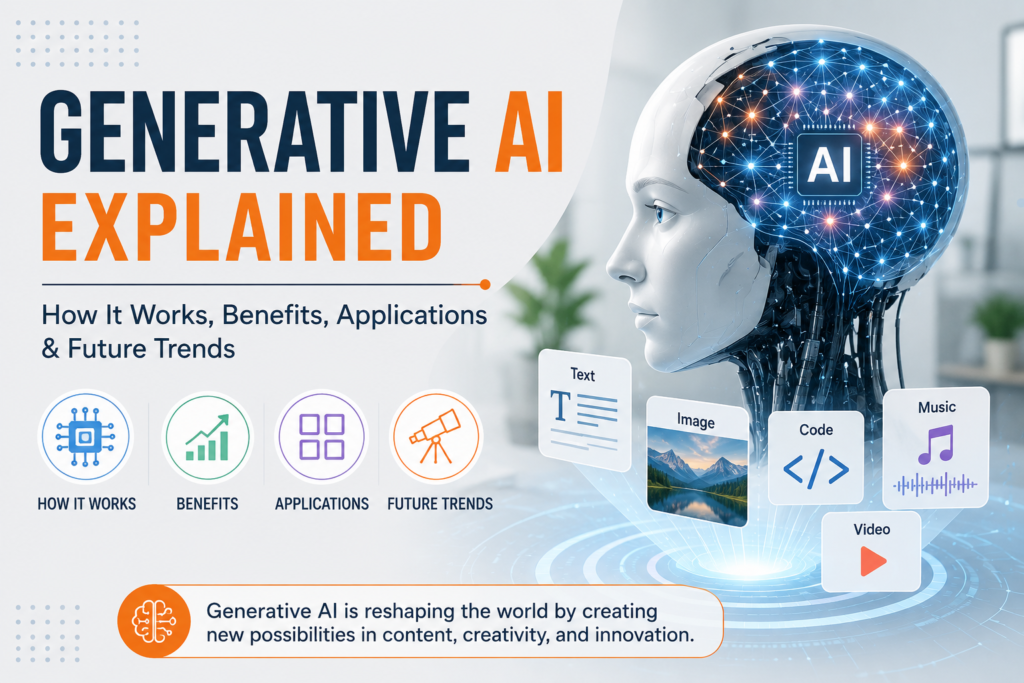
Artificial intelligence has evolved rapidly over the past few years, changing how people work, learn, and communicate. From voice assistants on smartphones to recommendation systems on streaming platforms, AI is becoming part of everyday life. One of the most exciting innovations in this field is generative AI. Unlike traditional AI, which mainly analyzes information or makes predictions, generative AI can create entirely new content based on user instructions.
Today, businesses, students, developers, marketers, and designers are using generative AI to save time, improve productivity, and explore creative ideas. Whether it is writing articles, generating images, creating software code, or assisting with research, this technology is opening new possibilities across many industries.
This guide explains what generative AI is, how it works, its key benefits, practical applications, challenges, and why experts believe it will play a major role in the future of technology.
What Is Generative AI?
Generative AI is a branch of artificial intelligence that produces original content instead of simply processing existing information. After learning patterns from large collections of data, it can generate text, images, videos, music, computer code, and other digital content based on a user’s request.
For example, imagine asking an AI assistant to write a professional email, create a social media caption, or explain a difficult science topic in simple words. Instead of searching for a ready-made answer, the system creates a fresh response using the knowledge it gained during training.
This ability makes generative AI different from many older AI systems that were mainly designed to classify information, recognize images, or predict outcomes.
How Does Generative AI Work?
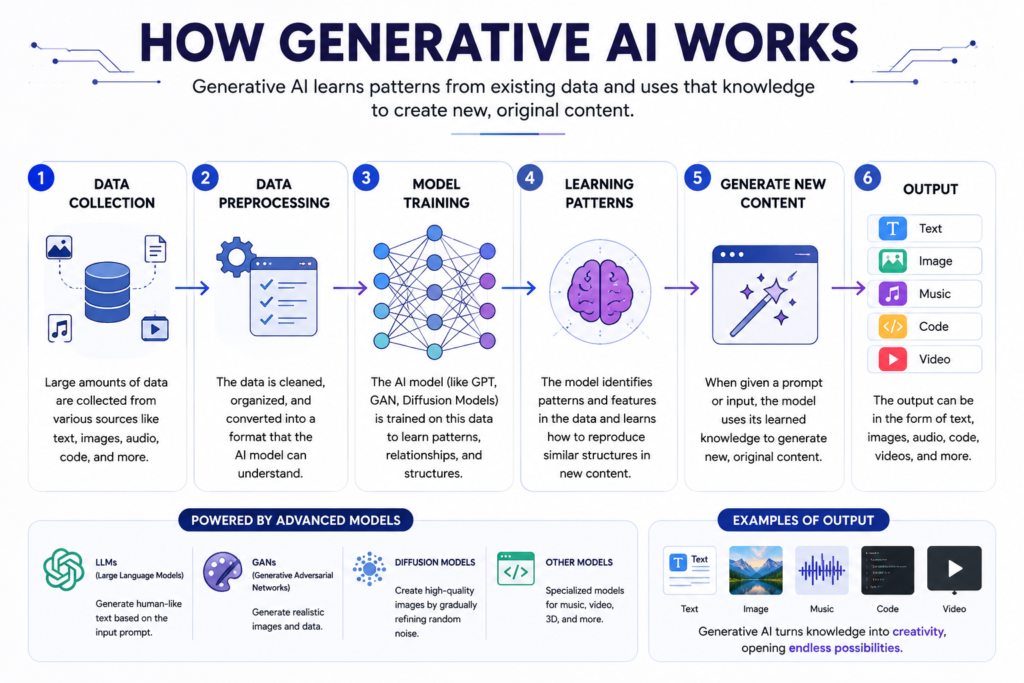
Although the technology behind generative AI is highly advanced, the overall process can be understood through a few simple steps.
Learning from Large Datasets
The first stage is training. AI developers provide the model with enormous amounts of information from books, websites, research papers, articles, images, and other reliable sources. During this stage, the model learns grammar, patterns, relationships, and the structure of different types of content.
Understanding User Instructions
When someone enters a prompt or asks a question, the AI carefully analyzes the request. It identifies important keywords and understands what type of response the user expects before generating an answer.
Creating Original Content
Instead of copying information from a single source, generative AI predicts the most appropriate sequence of words, images, or code based on its training. The result is newly created content that is designed to match the user’s request.
Continuous Improvement
Developers regularly improve AI models by updating training methods, refining algorithms, and reducing errors. As more research becomes available, these systems continue becoming faster, smarter, and more accurate.
Key Benefits of Generative AI
The growing popularity of generative AI is mainly due to the practical advantages it offers across different industries.
One of its biggest strengths is improved productivity. Many repetitive tasks that once required hours can now be completed much faster, allowing professionals to focus on more important work.
Generative AI also encourages creativity. Writers can brainstorm ideas, designers can explore new concepts, and developers can receive coding suggestions without starting every project from scratch.
Businesses benefit by improving customer support, creating marketing content more efficiently, and automating routine tasks. Educational institutions also use AI tools to help students understand complex topics through simple explanations and interactive learning experiences.
Another major advantage is accessibility. Small businesses and independent creators now have access to advanced digital tools that were previously available only to large organizations with significant resources.
Real-World Applications of Generative AI
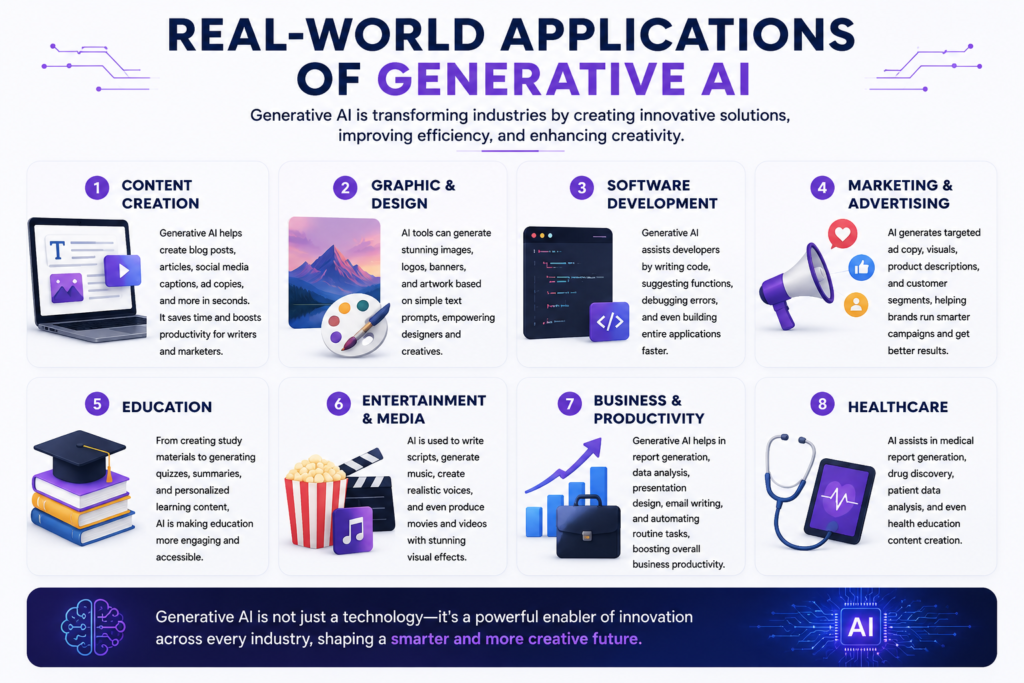
Generative AI is no longer limited to research laboratories. Today, it is used by millions of people across different industries to solve problems, improve efficiency, and support creativity.
Content Creation
Content creators, bloggers, and digital marketers use generative AI to draft articles, write email campaigns, create product descriptions, and develop social media content. While human editing is still important, AI helps reduce the time needed to prepare the first draft.
Education
Teachers use AI tools to prepare lesson plans, quizzes, and learning materials. Students benefit by receiving simple explanations of difficult concepts, creating study notes, and practicing new skills. When used responsibly, AI can become a valuable learning assistant rather than a replacement for independent study.
Healthcare
Healthcare professionals are exploring AI for medical research, documentation, and data analysis. Researchers can process large amounts of medical information more efficiently, helping them discover patterns that may support future treatments. However, important medical decisions should always remain under the supervision of qualified healthcare professionals.
Software Development
Developers use generative AI to write code, explain programming concepts, detect errors, and improve software quality. It can speed up development, but experienced programmers still review the generated code before using it in real projects.
Graphic Design
Designers use AI-powered tools to create illustrations, presentations, concept art, logos, and marketing visuals. These tools help generate creative ideas quickly while allowing designers to focus on refining the final result.
Customer Service
Many companies now use AI-powered virtual assistants to answer frequently asked questions and provide customer support around the clock. This improves response times while allowing support teams to concentrate on more complex customer issues.
Challenges of Generative AI
Like any advanced technology, generative AI has its own limitations. Like every technology, it has certain limitations that users should understand.
Sometimes AI-generated content may include incorrect or outdated information. Since AI predicts responses based on patterns, it may occasionally produce answers that sound convincing but are not entirely accurate. This is why important information should always be verified using trusted sources.
Privacy and copyright are also important considerations. Businesses and individuals should be careful when sharing sensitive information with AI tools and should respect intellectual property rights when using AI-generated content.
Using artificial intelligence responsibly is another important challenge. Developers, governments, and organizations continue working on guidelines that encourage responsible AI development while reducing risks such as misinformation and misuse.
Future Trends of Generative AI
The future of generative AI looks promising. Looking ahead, many experts believe AI will become a natural part of everyday life, offering smarter, faster, and more reliable solutions for both individuals and businesses.
Businesses are expected to increase their investment in AI-powered automation to improve productivity and customer experience. Educational platforms may deliver more personalized learning, while healthcare organizations could benefit from faster research and improved data analysis.
Future AI systems are also likely to support more natural conversations, better multilingual communication, and stronger collaboration between humans and intelligent software. At the same time, responsible development, transparency, and ethical standards will remain essential for building public trust.
To learn more about generative AI and the latest AI innovations, visit the official OpenAI website.
Conclusion
Generative AI is transforming the way people work, learn, create, and communicate. Its ability to generate original content has opened new opportunities for businesses, students, developers, educators, and creative professionals around the world.
Although this technology offers remarkable advantages, it should be viewed as a tool that supports human creativity rather than replacing it. Human knowledge, critical thinking, and responsible decision-making remain essential when using AI-generated content.
As artificial intelligence continues to evolve, generative AI is expected to play an even greater role in innovation across industries. Understanding how it works today will help individuals and businesses prepare for the opportunities and challenges of tomorrow’s digital world.